
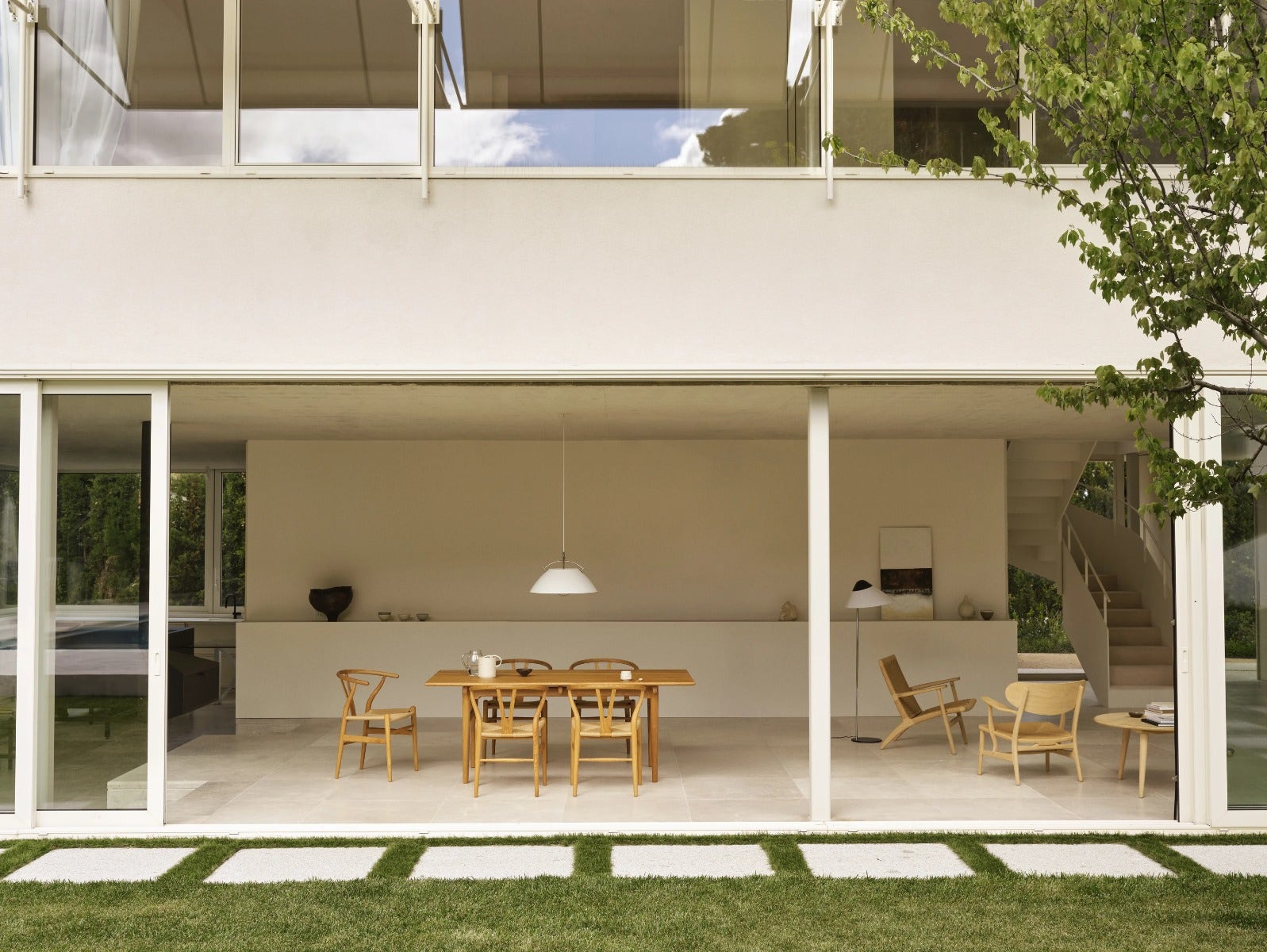
Designer Spotlight: Hans Wegner and the Art of the Everyday Chair
Some designers are remembered for a single piece. Hans Wegner is remembered for the way he thought about an entire category. Over his career, he designed more than 500 chairs, and what ties them together is not a signature look but a way of seeing. He treated the chair as something to be lived with, sat in, and quietly admired, rather than something to be put on display.
That balance is what makes his work feel so current. His pieces are warm without being nostalgic, simple without feeling spare. They have softness in the curves, intention in the joinery, and a sense that the maker understood the body just as well as the wood. Decades after they were first produced, Hans Wegner chairs still hold their place in contemporary homes because they were never tied to a moment in the first place.
For anyone drawn to that quiet, considered approach, the wider Hans J. Wegner collection is a strong place to start.
A Designer Who Started With the Material
Wegner trained as a cabinetmaker before he became a designer, and that order matters. He understood wood the way a writer understands their first language. He knew how oak behaved differently than teak, how a curve had to follow the grain rather than fight it, and how a joint could be both a structural detail and a visual one.
That respect for material is part of why his furniture has aged so well. Nothing is forced. The forms feel inevitable, as if the wood was always meant to settle into that shape. It is a kind of design that does not announce itself, but rewards the people who live with it over time.
That sensibility runs through almost everything he made, from his most iconic pieces to the quieter ones that often get overlooked. It is also why his partnership with Carl Hansen & Søn, which began in 1949, has produced furniture that continues to feel relevant generation after generation.
The Chair That Became a Household Name
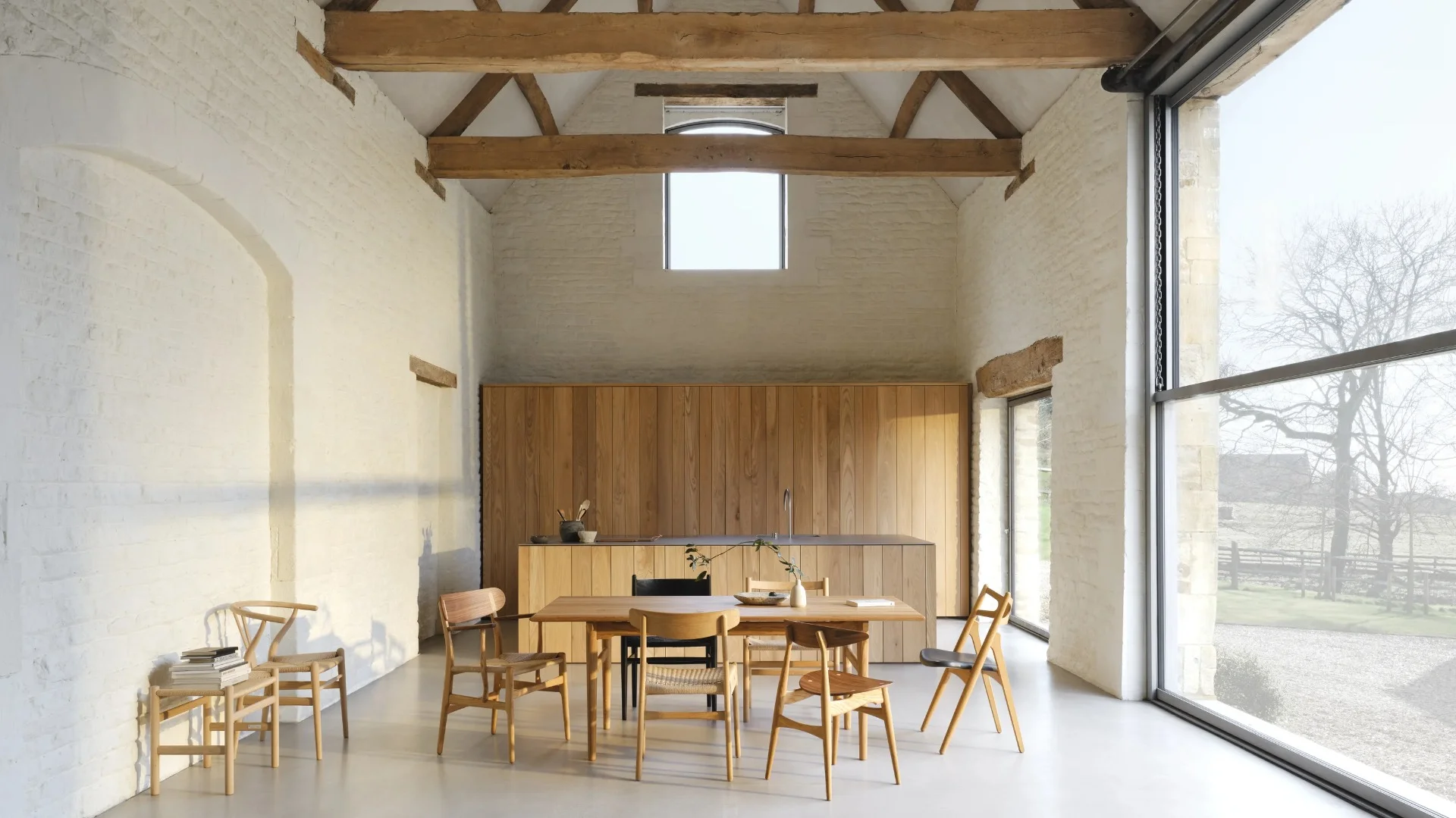
The Wishbone Chair (CH24), designed in 1949 for Carl Hansen & Søn, is the piece most people picture when they hear his name. Its Y-shaped back is instantly recognizable, but what makes it endure is how comfortably it slips into almost any room. It works at a formal dining table, around a kitchen island, or pulled up to a desk, and it never looks out of place.
It captures something essential about Wegner. The form is sculptural, but it is also genuinely useful. The hand-woven paper cord seat softens what could otherwise feel like a purely architectural object, and the curved top rail invites you to actually settle into it. The CH24 has been copied countless times, but the original still feels different in person, mostly because the proportions are so carefully resolved.
If there is one piece that explains why Hans Wegner is taught in design schools around the world, this is usually it.
A Sculptural Counterpoint
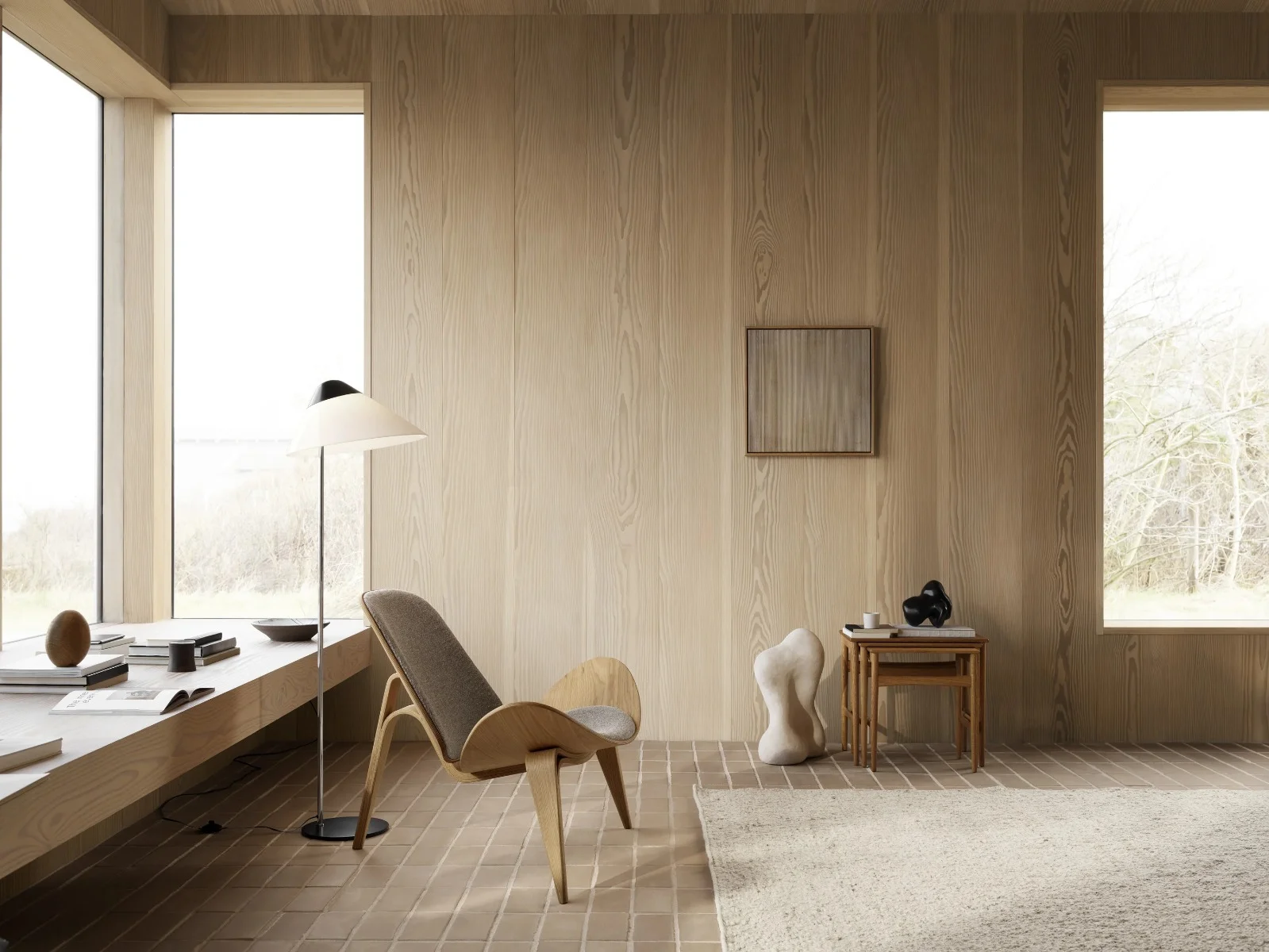
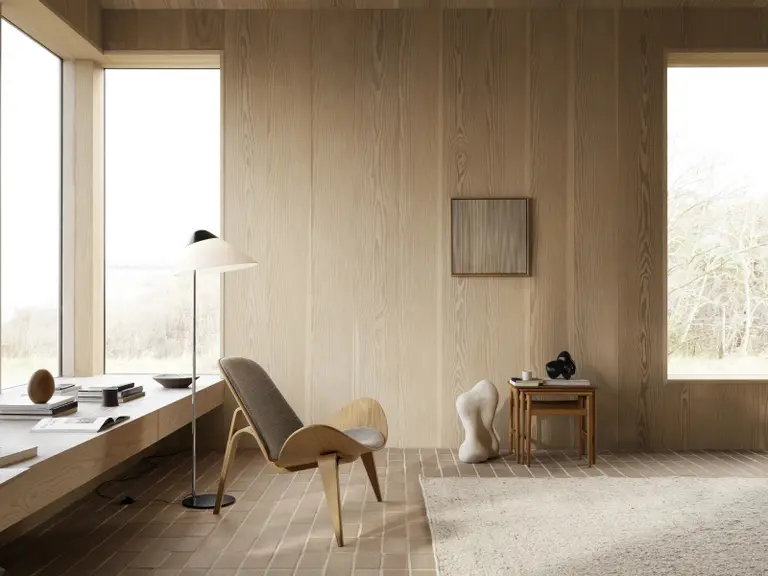
If the Wishbone is Wegner at his most approachable, the CH07 Shell Chair is Wegner at his most expressive. Designed in 1963, it stands on three legs with a softly curved plywood seat that almost looks like it is about to take flight. People call it the "smiling chair" for a reason.
That makes it the ideal piece to bring a little tension into a more restrained room. Paired with simpler dining chairs or a quiet sofa, the Shell Chair prevents the overall look from feeling too safe. It reminds people that even a piece of furniture rooted in craft can still be sculptural, surprising, and a little unexpected.
Not every chair in a home needs to make a statement. But one well-placed Shell Chair can change the entire feel of a room.
The Quiet Pieces That Hold a Room Together
A space cannot be built entirely from statement chairs. Some pieces need to bring calm and structure, and that is where Wegner's more understated work comes in.
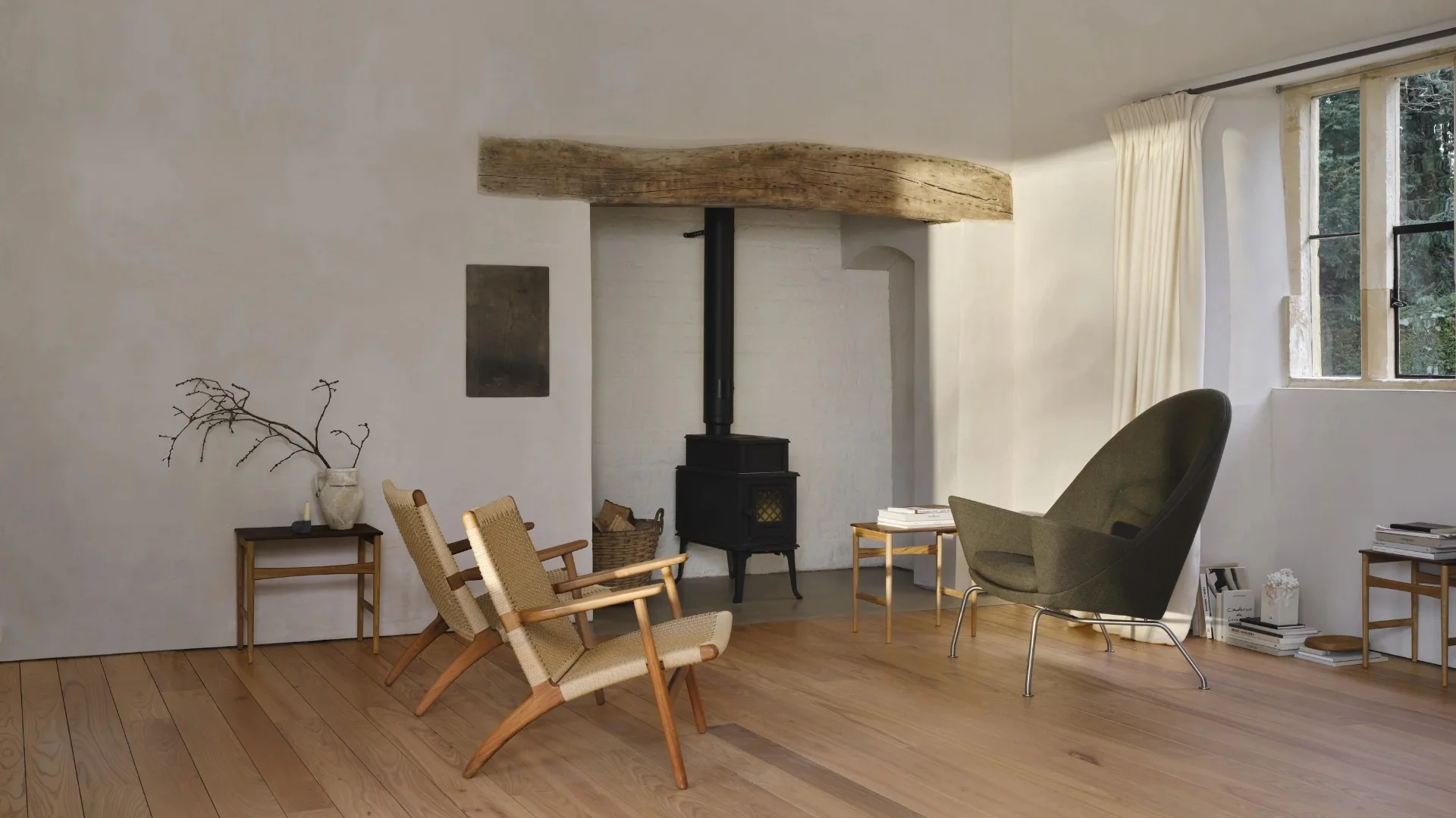
The CH25 Easy Chair is one of the clearest examples. It was the very first piece Carl Hansen produced with Wegner, and it remains one of the most lived-in chairs in his catalogue. The frame is low and horizontal, the hand-woven paper cord stretches across a generous seat and back, and the whole thing feels less like a showpiece and more like a place you actually want to spend an afternoon. It grounds a living room without ever pulling focus.
The CH23 Dining Chair plays a similar role at the table. It carries the same craftsmanship and proportions as its more famous siblings, but with a softer, more classic profile. It creates a sense of ease rather than formality, which makes it especially effective alongside more expressive pieces.
Together, these quieter essentials help a Wegner-influenced home feel complete rather than crowded.
Chairs With Presence
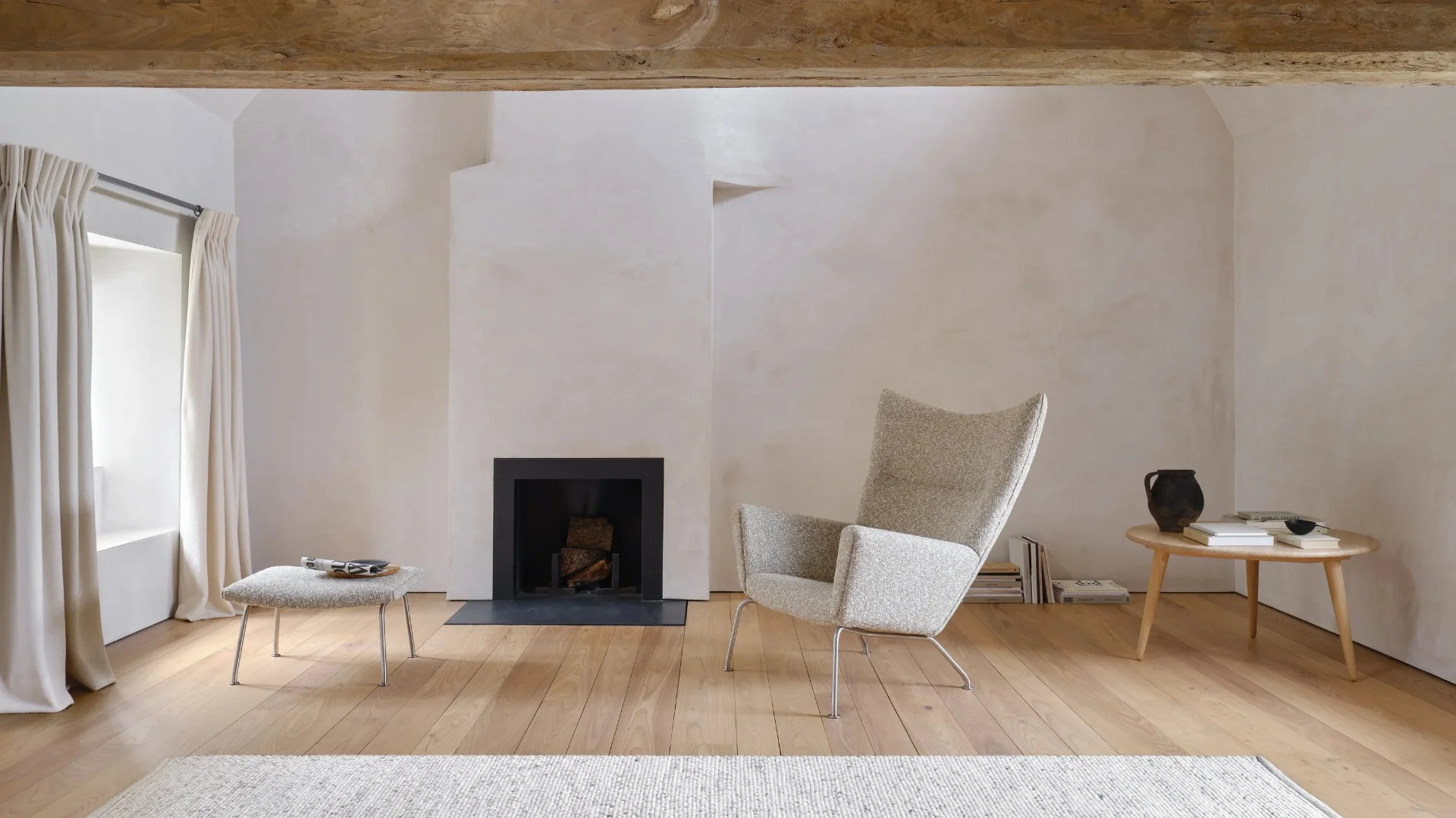
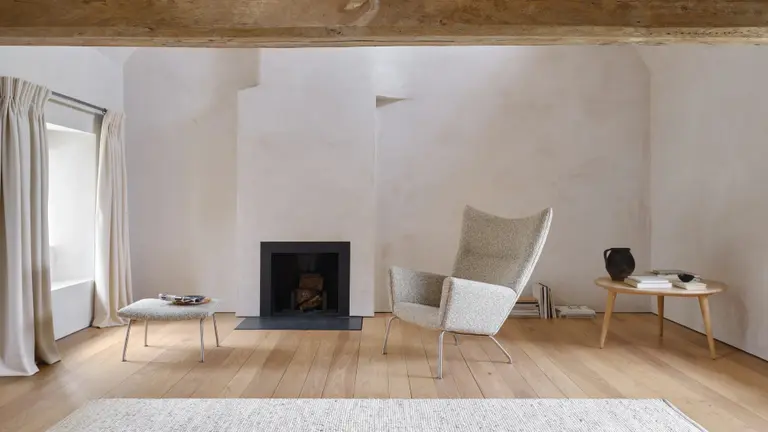
Wegner could be restrained, but he could also be wonderfully expressive when a piece called for it. The CH445 Wing Chair is the clearest example. It is a modern reinterpretation of the classic wing chair, with sweeping side panels that gently wrap around the sitter. It has presence without ever feeling heavy, and it defines a corner of a room in a way few other chairs can.
The same is true of the CH45 Rocking Chair, though in a different register. Wegner's take on the rocker is calmer than most, with clean lines, a paper cord seat, and a gentle motion that invites slower moments. It is not a chair that asks for attention, but the eye keeps coming back to it.
A room does not need many pieces like these. One is usually enough. But when the rest of the setting is calm, a chair with this much character can change the entire feel of a space.
The Small Rituals
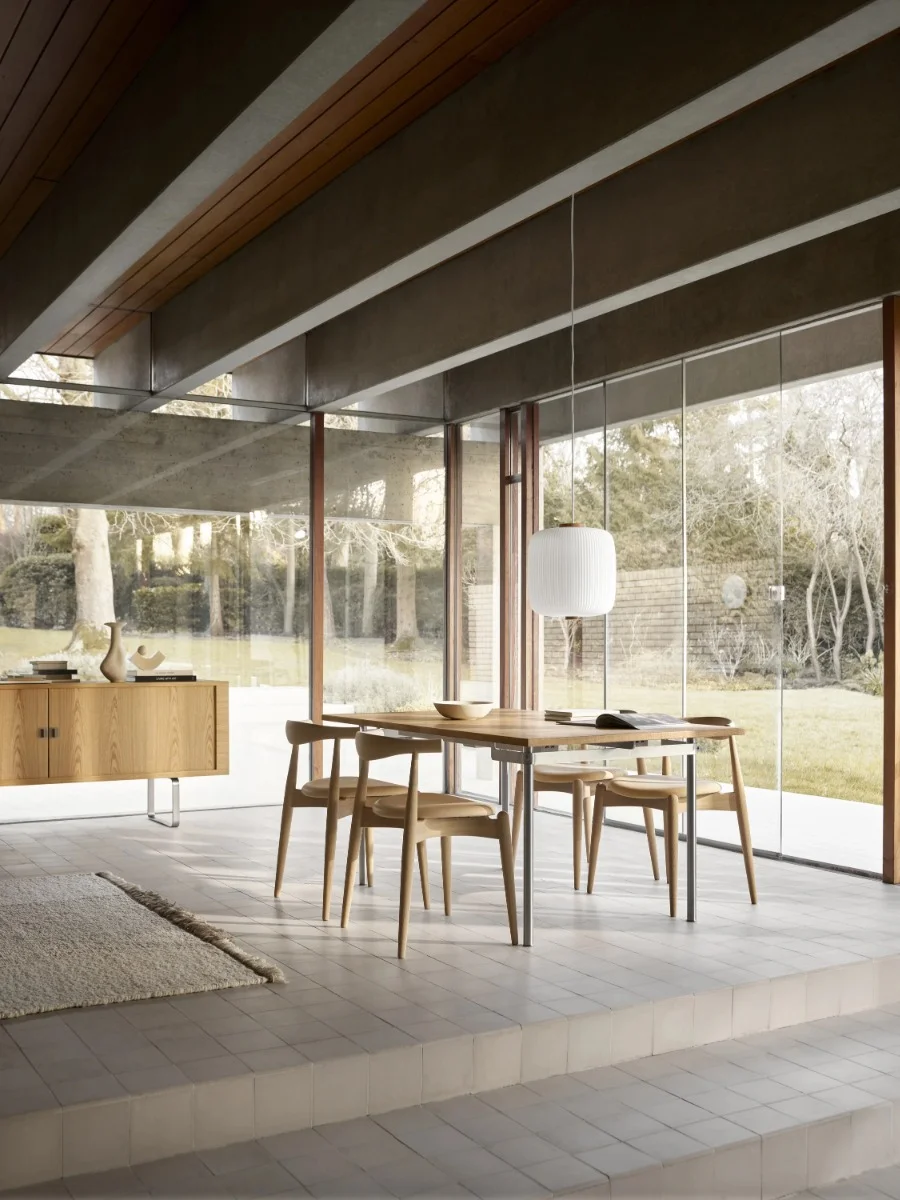
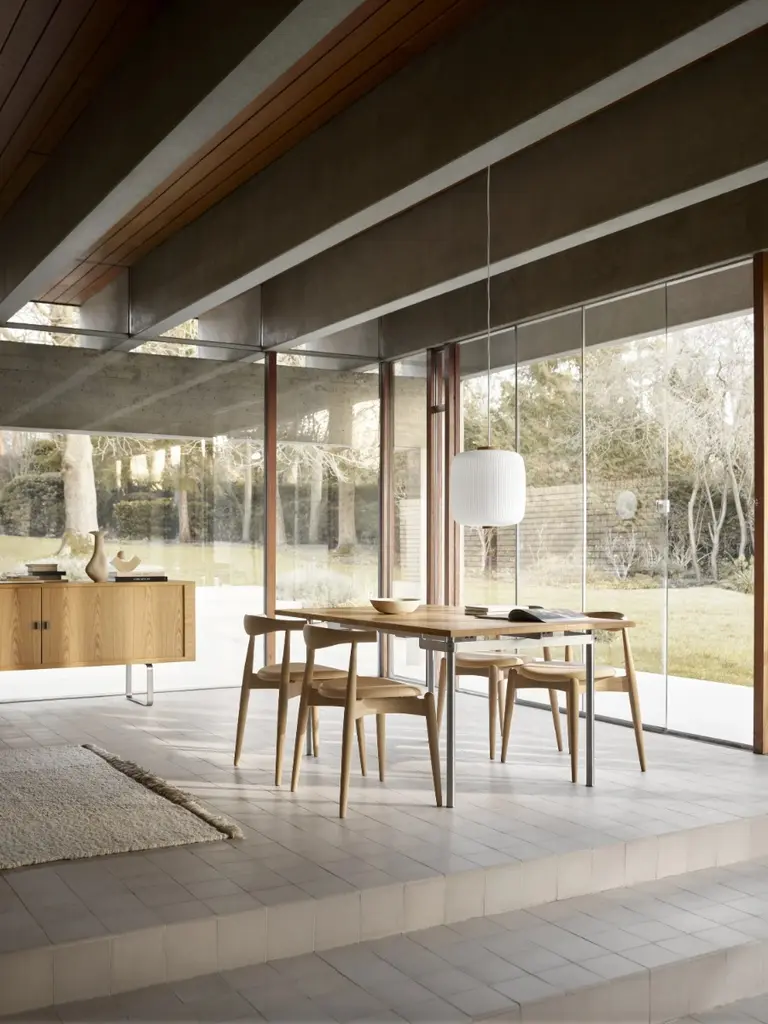
Some of Wegner's most quietly satisfying pieces were made for the smaller moments of daily life. The CH20 Elbow Chair is a perfect example. Originally drawn in the 1950s but not put into production until decades later, it is a compact armchair with a softly sculpted top rail and just enough comfort for the kind of seat people actually use every day, in kitchens, at small desks, or pulled up to a breakfast table.
It is a more modest piece than the Wishbone or the Shell Chair, but it captures everything that makes Wegner's work feel different. It treats a quiet domestic ritual, the in-between moments of the day, as something worth designing for. It is functional without being clinical, and considered without trying too hard.
A piece like the CH20 adds warmth to the broader Hans Wegner story. It is less iconic than the CH24, but it shows the same care for the people who would eventually use it.
A More Considered Home
Building a home around Hans Wegner is not about collecting matching pieces. It is about choosing objects that feel honest, useful, and quietly beautiful, and then letting them settle into the rhythm of daily life. The most successful rooms tend to mix one or two of his more expressive chairs, like the Shell Chair or the Wing Chair, with softer anchors like the CH25 or the CH23, allowing the whole space to feel layered rather than curated.
That is why Wegner continues to resonate so strongly in modern interiors. His chairs were never designed to chase a trend, which is exactly why they have outlasted so many. They bring craftsmanship, warmth, and an unmistakable point of view to everyday living. And in a home, those are often the qualities that matter most.
Explore the full Hans J. Wegner collection at GR Shop to see which piece is the right place to begin.