
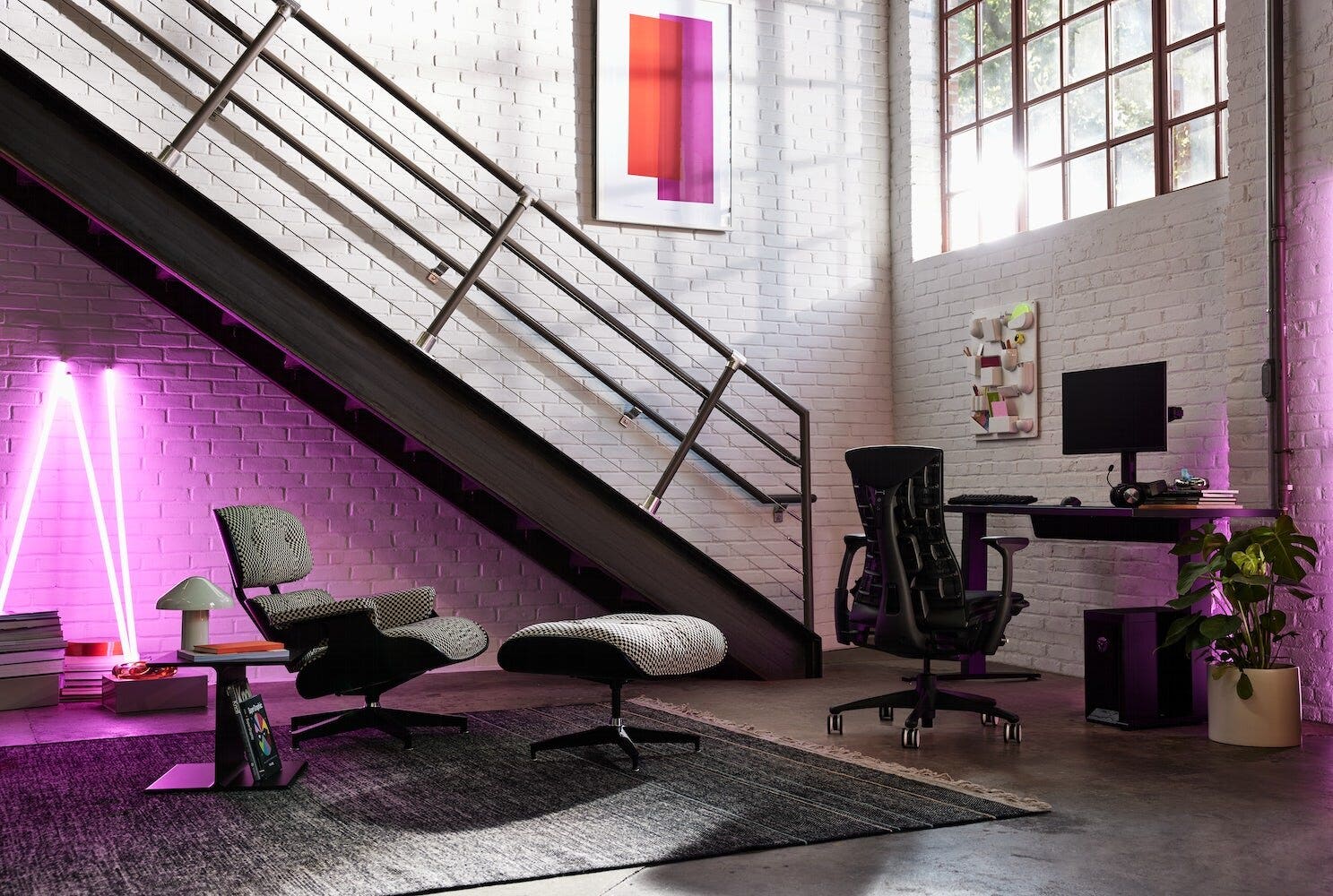
Herman Miller x Logitech G Embody Gaming Chair Review
Herman Miller does not need an introduction in ergonomic seating. The company has been shaping what a serious task chair looks like since the original Aeron launched in 1994, and the Embody that followed in 2008 took the brief in a new direction: a chair built to move with the body rather than hold it still. The Logitech G collaboration takes that same platform and repositions it for gamers, with a new seat foam, new colorways, and subtle branding tweaks.
Specs at a glance
Seat height range
16" – 20.5"
Seat depth
15" – 18" (adjustable)
Backrest height
Mid-back (ends at shoulder blades)
Recline range
94° – 120°
Tilt lock positions
3, plus forward tilt
Armrest adjustability
Height (4" – 8.75"), width (11.5" – 21")
Weight capacity
300 lb / 136 kg
Base
5-star aluminum, dual-wheel casters
Upholstery
Sync Fabric (polyester) over copper-infused foam
Warranty
12 years, 24/7 use
Assembly
None — ships fully assembled
Packaging, Build Quality, and a Closer Look
One of the genuinely impressive things about the Embody becomes clear before the chair is even out of the box: it arrives fully assembled. The box is enormous — roughly 30" × 30" × 45" and over 60 pounds — and the packaging is designed to be opened at the side so the chair wheels out on its own casters. No allen keys, no loose hardware bag, no cardboard-strewn living room. Remove the plastic sheath, peel back some protective cardboard, and the chair is ready to roll to a desk.
This matters more than it sounds. Competing premium chairs in this price bracket almost universally require some degree of assembly, and a badly supported backrest bolt from day one can undo a lot of what makes a chair comfortable. Herman Miller removes that variable entirely. Packaging is also noticeably eco-conscious, with minimal styrofoam and mostly recyclable cardboard and molded pulp.
It is worth noting that the box is large enough to cause delivery logistics problems in some homes. Narrow hallways, apartment stairwells, and tight elevators are worth planning for.
Build Quality and Materials
The frame is where Herman Miller's reputation earns its keep. The base is die-cast aluminum with a graphite finish, with five reinforced arms ending in dual-wheel casters that glide well on both hard floors and low-pile carpet. The gas lift, mechanism housing, and backrest spine all feel engineered rather than assembled, with zero creak under load shifts and no play in any of the major joints.
The seat uses a layered construction and features:
A pixelated support structure of interlocking springs and plastic elements beneath the seat pan
A copper-infused cooling foam layer — the main physical change from the standard Embody
An additional foam layer tuned for gaming-session comfort
Sync Fabric, a three-layer knit polyester upholstery that stretches in four directions without creasing
The copper foam is Herman Miller's answer to heat buildup over long sessions. It is not mesh-level ventilated — if airflow is a priority, the Aeron is the better choice — but it does noticeably resist the hot-spot feeling that cheaper foam chairs develop after two or three hours.
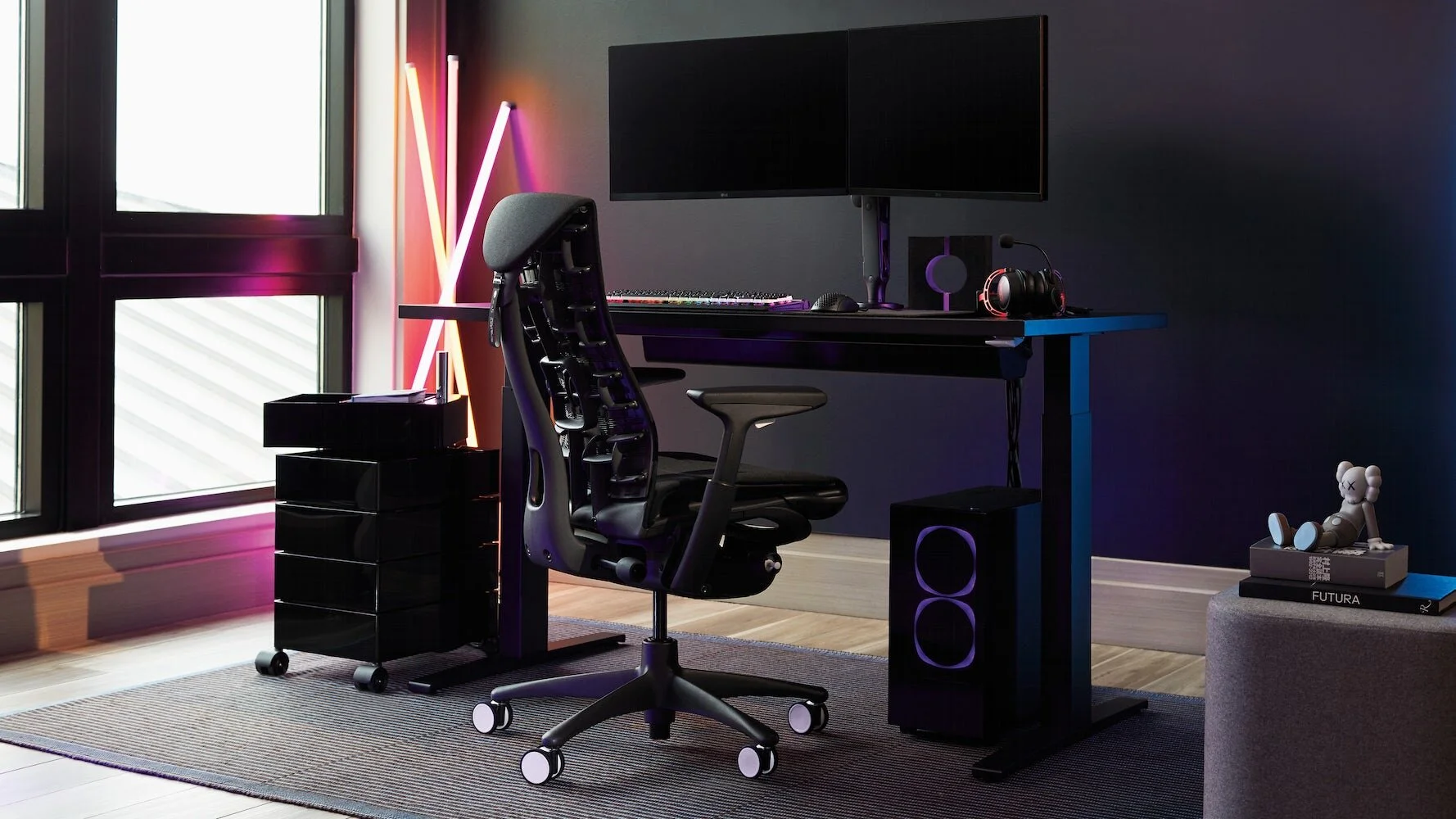
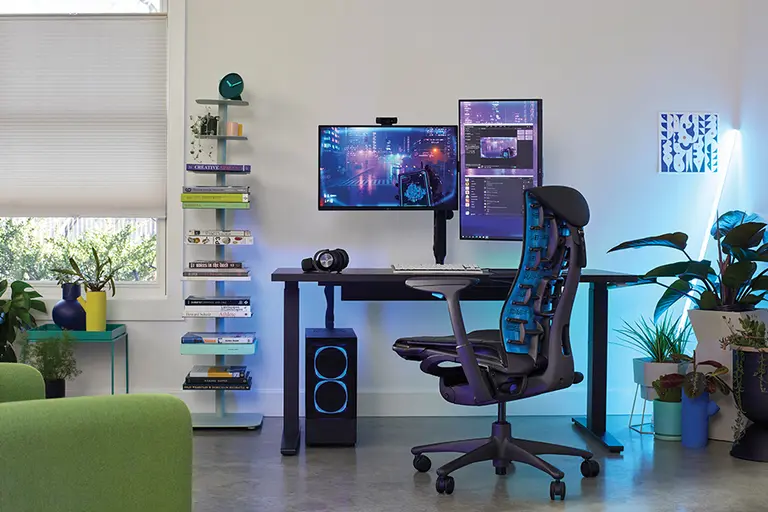
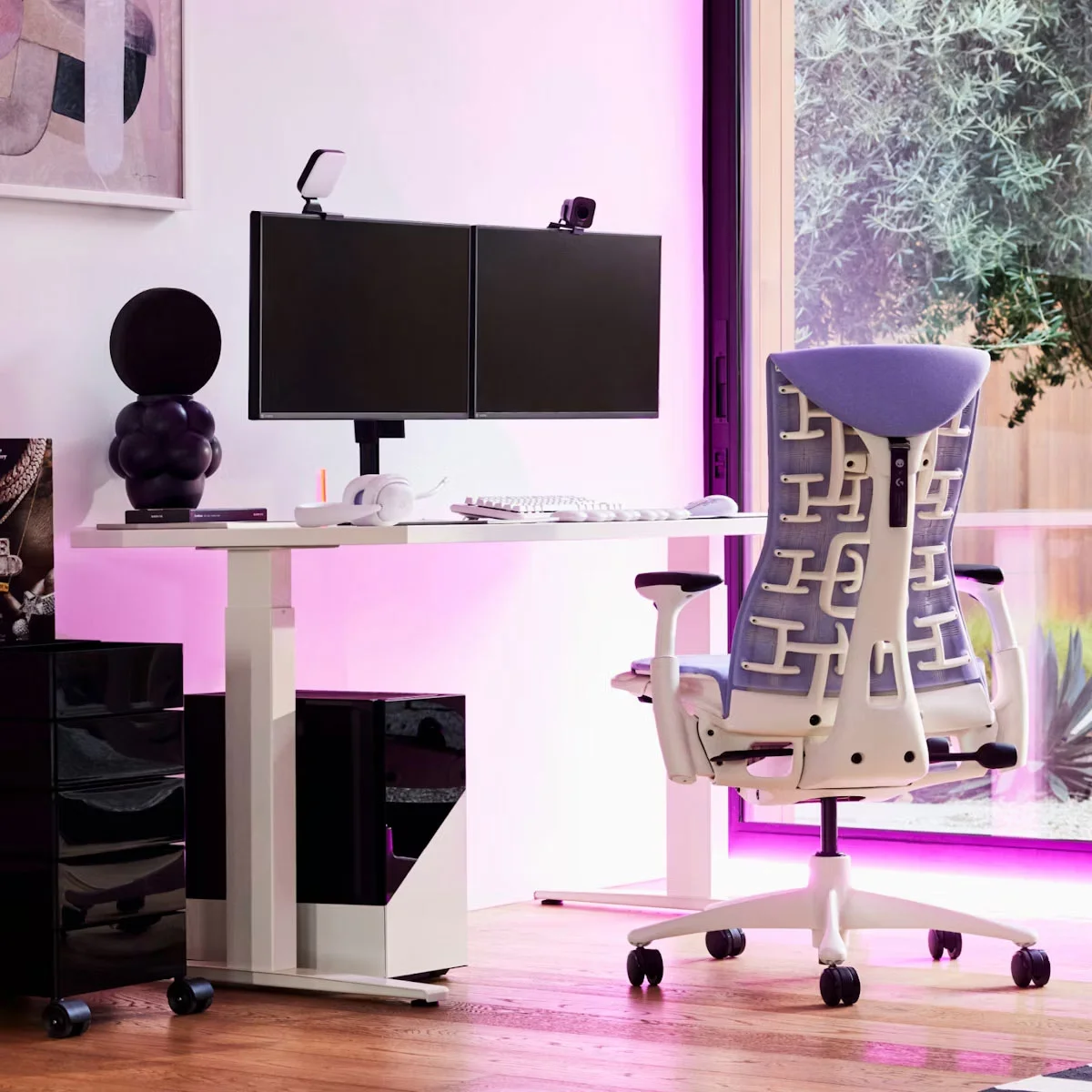
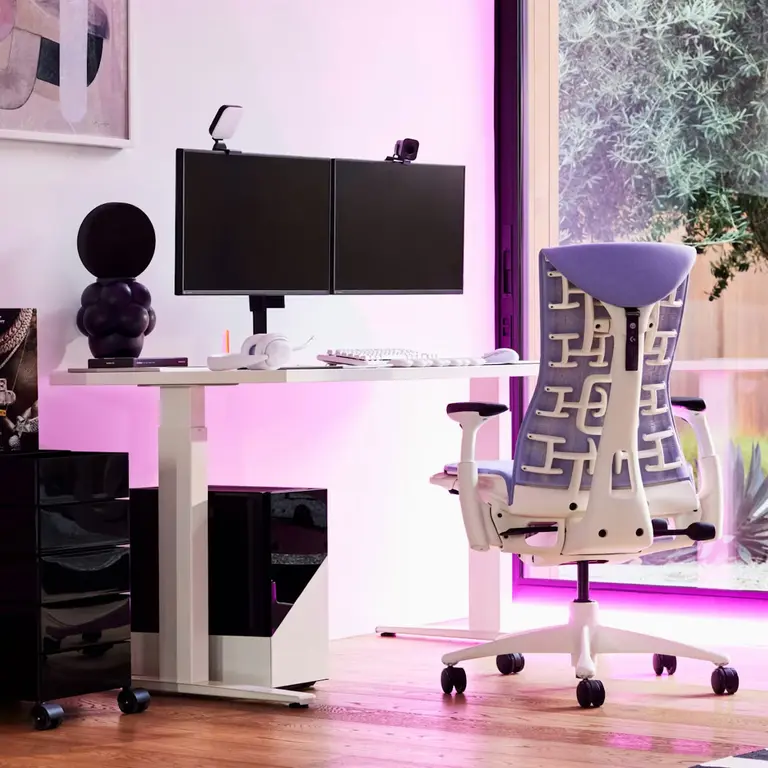
The Embody's back is the single most recognizable design element in the entire premium chair market. Seen from behind, it looks closer to a biological spine than a piece of furniture: a central vertical column with horizontal "ribs" branching outward, all built from flexible black plastic in a semi-exposed frame.
It is polarizing. Some buyers find it genuinely beautiful; others find it industrial to the point of being ugly. Neither reaction is wrong, and anyone considering this chair should spend time with product photography from multiple angles before committing.
What the design actually does is distribute pressure across a much wider surface area than a traditional lumbar-pad chair. Rather than pushing one firm point into the lower back, hundreds of small support elements conform to the spine's shape and flex independently as posture shifts. Lean left, and the left side of the backrest flexes with the body. Lean back, and the whole structure articulates. This is the "Pixelated Support" system, and once dialed in it is genuinely different from every other chair in this price class.
What's Not Here
No headrest. Herman Miller's position is that a well-designed ergonomic chair does not need one, and the mid-back design ends roughly at the shoulder blades.
No 4D armrests. The arms adjust for height and width only. They do not pivot, slide forward/backward, or angle inward.
No mesh option. The gaming edition is fabric-over-foam only.
Adjustability, Ergonomics, and Daily Use
Seat height adjusts from 16 to 20.5 inches via a standard pneumatic cylinder — a usable range for most adults between roughly 5'4" and 6'2", though very tall users may find the top of the range restrictive and should consider a higher-cylinder alternative.
Seat depth is where the Embody starts doing something more interesting. Rather than sliding the entire seat pan forward, the Embody has handles on both sides of the seat that extend an additional three inches of thigh support outward — locking in six discrete positions. This is a better solution than a sliding pan because the seat's support structure stays anchored relative to the backrest. Getting this adjustment right is one of the single most important things a new owner can do, and an incorrectly set seat depth is the most common cause of early dissatisfaction.
Recline and Tilt
The Embody's tilt is body-weight-controlled with roughly 18 degrees of recline, adjustable via a tension knob on the right side. A three-position tilt limiter lets the chair lock upright, at a midpoint, or at full recline. There is also a forward-tilt kicker for occasional active sitting.
The tilt feel is one of the chair's quiet strengths. It is smoother and more natural than the Aeron's and encourages the constant micro-movements that the entire design philosophy is built around. It is also noticeably shallower than chairs designed for full lean-back relaxation — the Embody does not convert into a lounge chair, and buyers who want to fully recline to watch video or nap should look elsewhere.
Armrests
The arms adjust for height (4" to 8.75" above the seat) and width (11.5" to 21" between pads). There is no forward/backward slide, no pivot, no pad-angle adjustment, and no rotation.
Casters, Base, and Movement
The five-star aluminum base is heavy, stable, and creak-free. Standard casters are rated for carpet; hard-floor casters are available as an option. Both glide well, and the chair rolls with low effort even when fully loaded. The overall footprint is more compact than racing-style gaming chairs, which helps in smaller desk setups.
Sitting Experience, Value, and Verdict
First Impressions vs. Long-Term Feel
The Embody Gaming Chair is unusual among premium chairs in that it does not necessarily impress on first sit. Buyers coming from deeply cushioned gaming chairs, plush executive chairs, or even older office chairs that allowed poor posture often find the initial feel oddly firm, a little clinical, and somewhat unforgiving. That is not a defect. It is a genuine adjustment period — both mechanical (finding the right BackFit, seat depth, and tension combination) and physiological (the body adjusting to better posture).
Most owners who stick with it report the chair getting noticeably better across the first two to four weeks.
What Long Sessions Actually Feel Like
This is where the Embody earns most of its loyalty. On a five-hour work block followed by a three-hour gaming session — the kind of day that leaves a Secretlab or Razer occupant visibly fidgeting by hour six — a properly dialed-in Embody produces noticeably less cumulative fatigue. The Pixelated Support system's constant micro-adaptation means the lower back, mid-back, and thoracic region each get independent support as posture shifts, and the chair does not develop pressure hot spots the way fixed-contour chairs do.
Heat management is above average for a foam chair. The copper-infused layer meaningfully slows heat buildup but does not eliminate it. For hot climates or users who run warm, a mesh chair like the Aeron Chair might be a better fit.
Value and Warranty
What distinguishes the Embody Gaming Chair is the 12-year, 24/7 warranty — genuinely class-leading in this market, where five years is typical at the premium tier and two or three years is standard for gaming chairs. Amortized over the full warranty period, the annual cost is competitive with far cheaper chairs that will need to be replaced once or twice in the same window.
Embody Gaming vs. Standard Embody
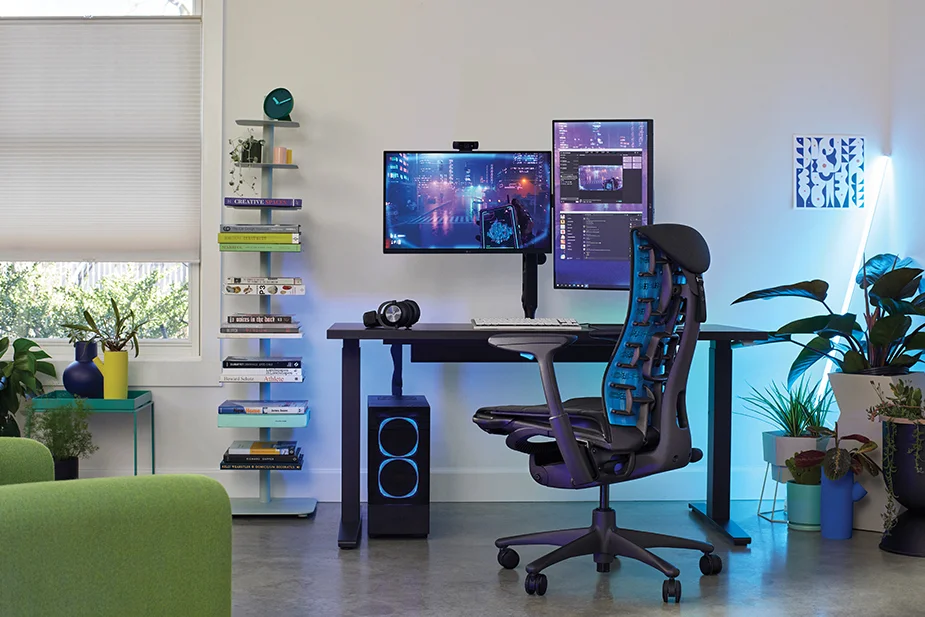
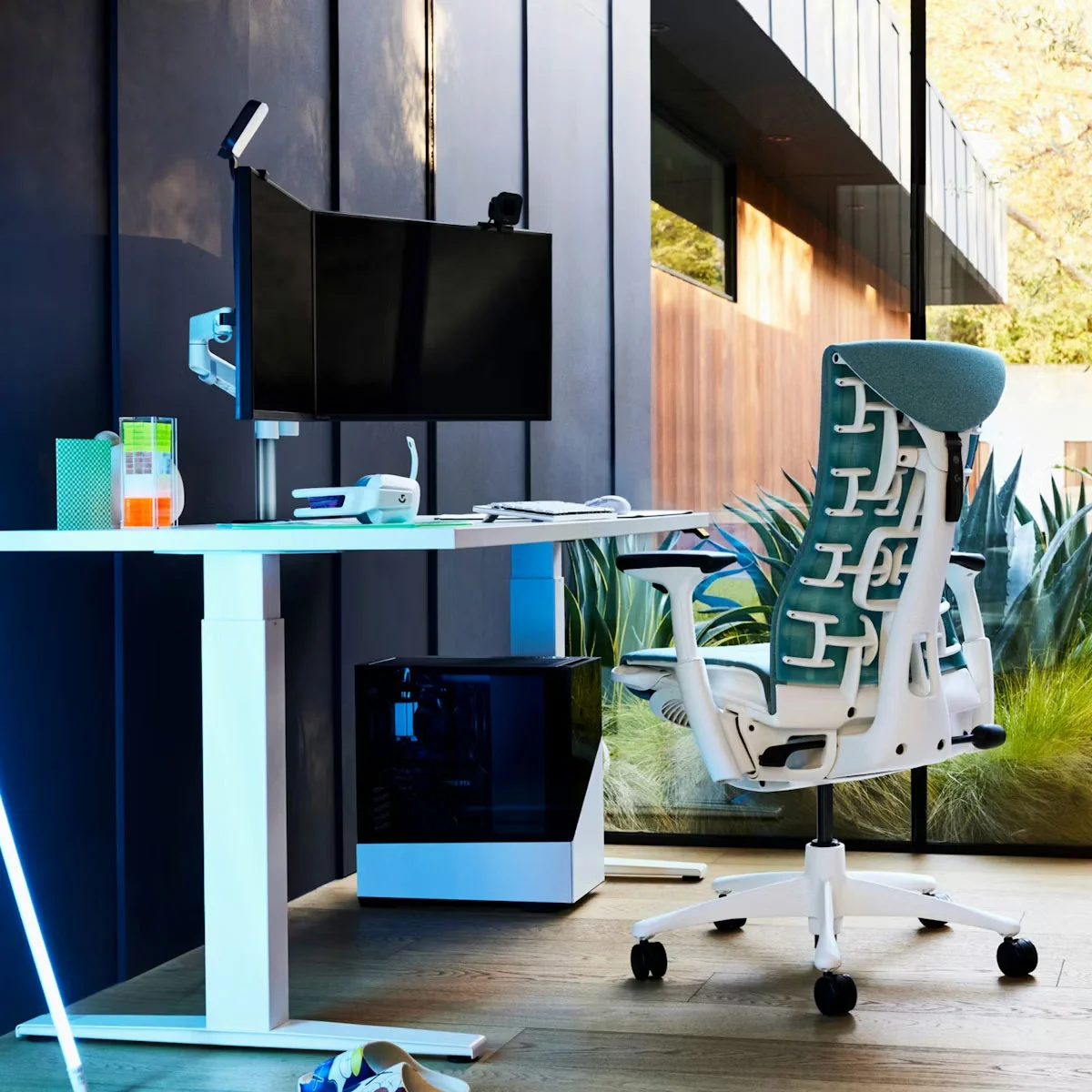
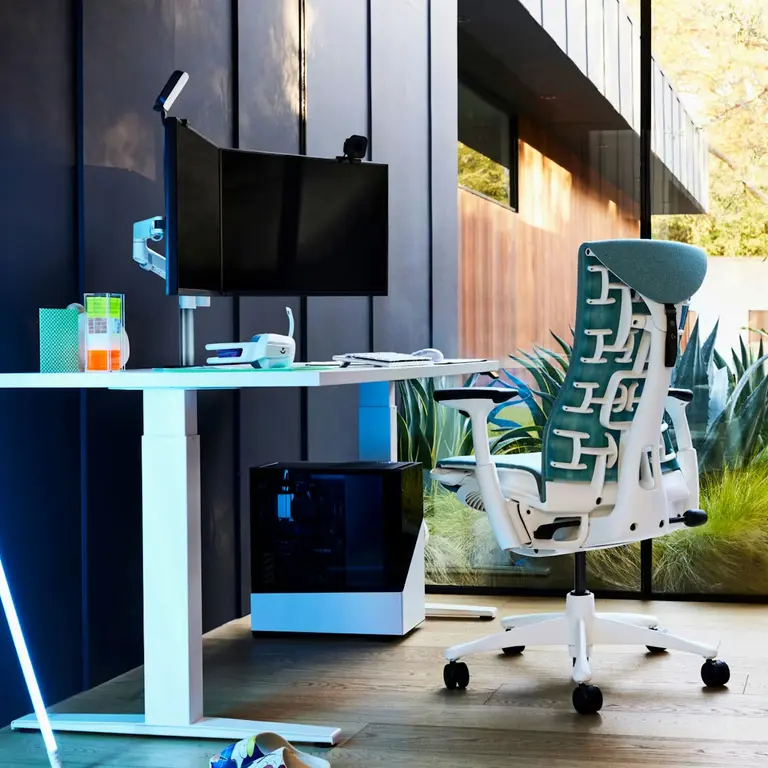
The two chairs share the same frame, mechanism, adjustments, and backrest. Differences are limited to the seat (extra foam layer in the gaming edition), upholstery colorways (black/cyan, black/white, amethyst/white, galaxy/white), and subtle branding. The gaming edition runs slightly less than the most expensive office configurations.
For most buyers, the gaming edition's softer initial seat feel is the main reason to choose it, with the colorways a secondary draw. Buyers who want a cooler, breathier seat tend to prefer the standard Embody, and the user complaints about firmness through the seat are more common on the gaming version than the classic.
How It Compares Within Herman Miller's Gaming Lineup
Herman Miller now offers three distinct gaming chairs, and the choice between them comes down to sitting style and budget rather than any one chair being objectively better:
Aeron Gaming Chair — Full mesh seat and back (8Z Pellicle), stronger and more structured lumbar support, significantly better ventilation. Suits users who want a firmer, more traditional ergonomic feel and run warm. The most adjustable of the three.
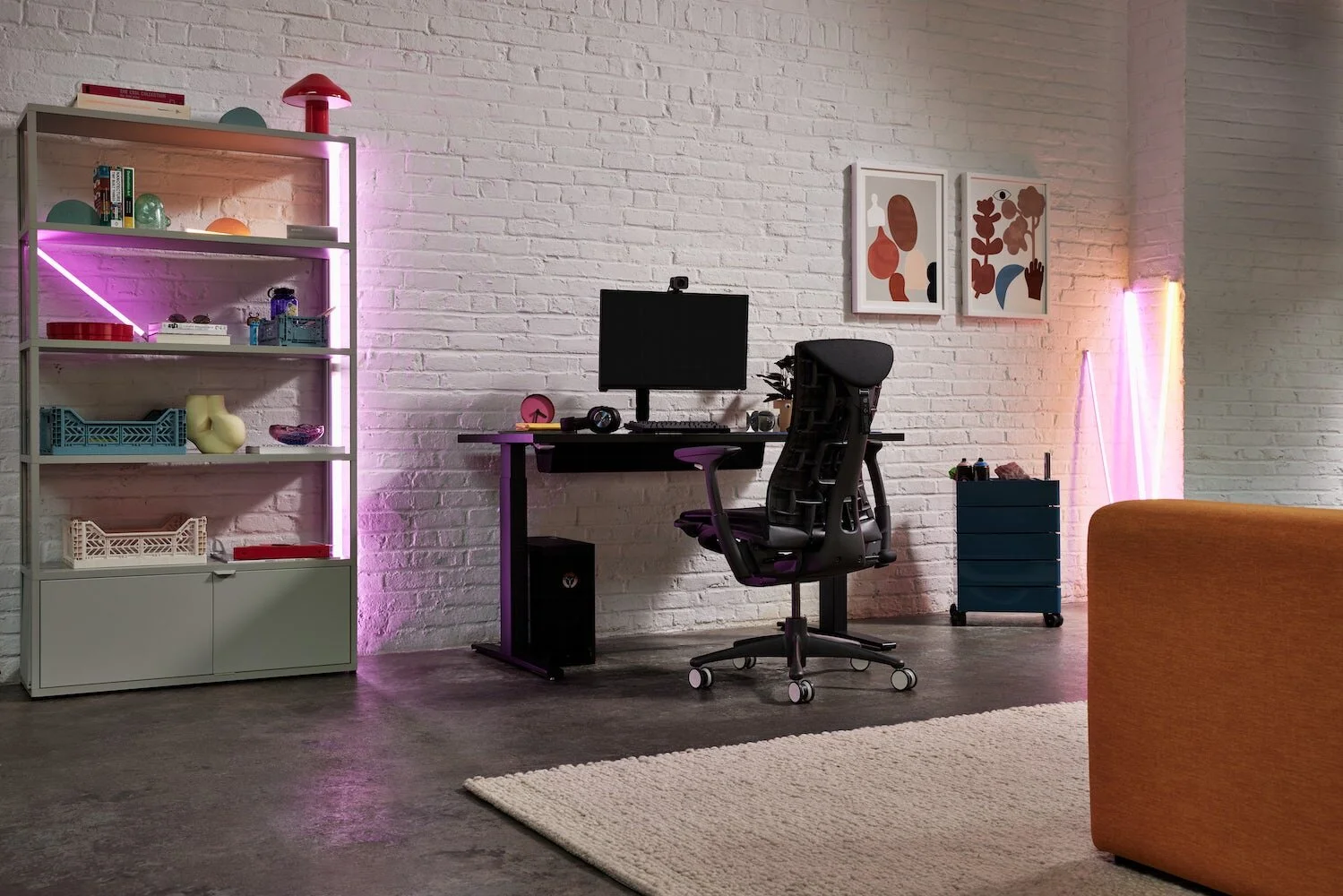
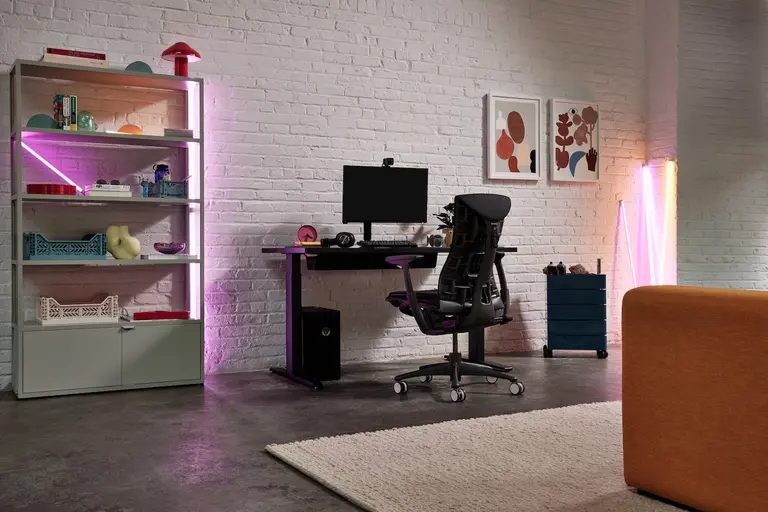
Embody Gaming Chair — Foam over a pixelated support system, softer and more distributed support, tilt geared toward movement. Suits users who shift positions constantly and want a chair that moves with them.
Sayl Gaming Chair— Suspension-back design with a distinctive unframed backrest, fewer adjustments than the other two, and a noticeably lower price. The entry point into Herman Miller's gaming range for buyers who want the brand's ergonomics without the top-tier spend.
Pros
Fully assembled out of the box with minimal setup
Pixelated Support backrest genuinely different from anything else in the market
BackFit allows precise spine alignment across a wide range of body types
Excellent long-session fatigue performance once dialed in
12-year 24/7 warranty is class-leading
Copper-infused foam meaningfully reduces heat buildup vs. standard foam
Build quality and materials justify the premium positioning
Cons
No headrest option
Premium price point
Verdict
The Embody Gaming Chair is a specialist product. It is not trying to be the most comfortable chair from the first sit, the most adjustable chair on the spec sheet, or the best value in the category. What it offers is a specific, coherent approach to long-session seating — one that rewards patience during setup and delivers genuinely reduced fatigue over hours of use.
For buyers who spend most of their day at a desk, shift positions constantly, and have already ruled out the cheaper tier of gaming chairs on comfort grounds, the Embody belongs on the shortlist. For buyers who want plush immediate comfort, precise arm control, integrated head and neck support, or a mesh back, the Aeron Gaming Chair will be a better fit. For buyers who want Herman Miller ergonomics at a more accessible price, the Sayl Gaming Chair is the logical starting point.
The price remains a genuine barrier, and no amount of warranty math makes it a casual purchase. But for the right sitter, the Embody is one of a very small number of chairs in this market that actually earns its premium positioning.