
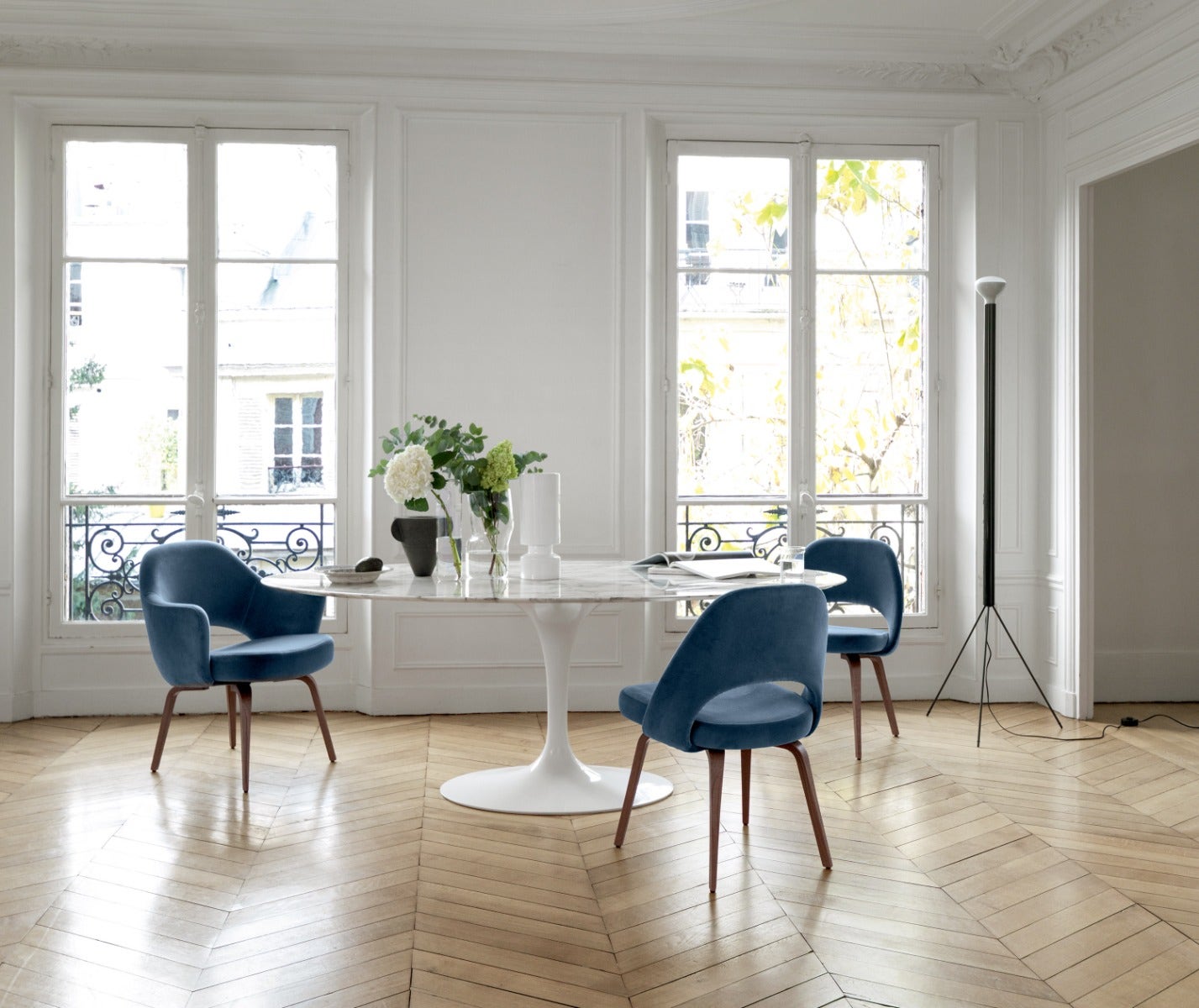
Building a Room Around Saarinen's Pedestal Collection
Few furniture shapes are as recognizable as the pedestal base. One leg, no clutter underneath, a top that seems to float. That's Eero Saarinen's Tulip collection, and it's still one of the most requested designs in modern furniture almost 70 years after he made it.
Saarinen, a Finnish-American architect, wanted to get rid of what he called the "slum of legs" under a typical table and chair set. His solution was a single column supporting the top, first used on the Tulip collection for Knoll in 1956 and still produced by Knoll today. The result is a table that visually clears the floor around it, which matters more than it sounds. In smaller rooms, it just makes the space feel less cluttered.
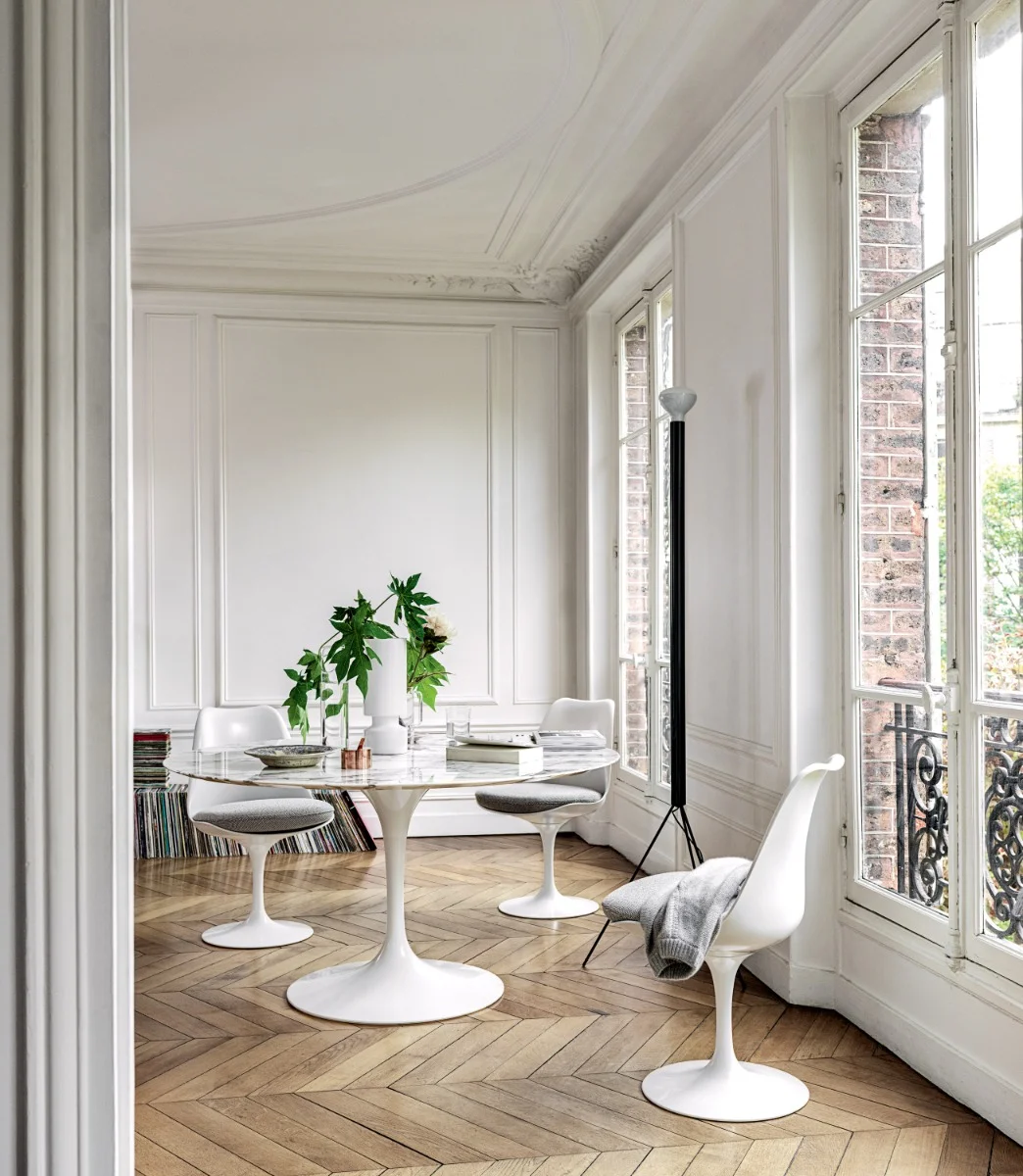
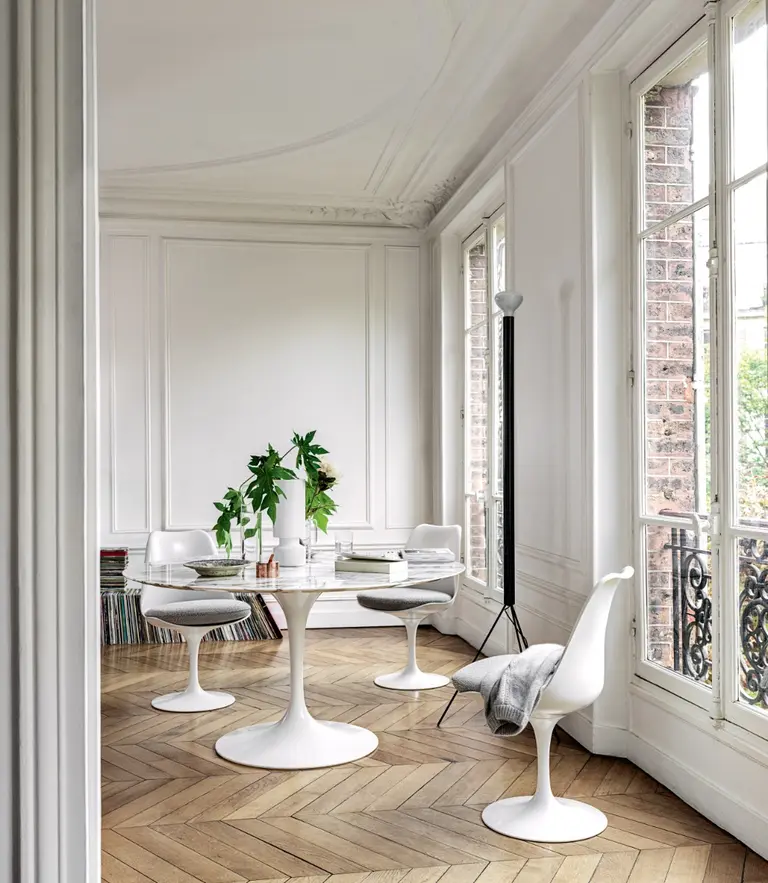
The Saarinen round dining table works best in square or smaller dining rooms, since a round top doesn't create dead corners the way a rectangular table can, and typically seats 4 to 5 depending on diameter. The Saarinen oval dining table is the better fit for longer rooms or larger households, seating 6 to 8 while keeping the same pedestal-base look. If you're not sure which fits, measure your room first and leave at least 36 inches of clearance on all sides for chairs to pull out.
The same pedestal design scales down for living rooms, too. A Saarinen round side table works next to a sofa or chair, and a Saarinen round coffee table anchors a seating area without the visual weight of a traditional four-legged coffee table. Both read as part of the same family as the dining table, so you can carry the look through a whole floor plan without repeating the exact same piece.
Material matters as much as shape here. Laminate is the lightest and most affordable option, with a clean, matte finish. Marble, typically Carrara or Arabescato, is heavier, more formal, and shows natural veining, no two tops look exactly alike. Wood veneer sits somewhere between the two if you want more warmth. Marble tops are usually a better fit for dining rooms that get light everyday use but not heavy abuse, since natural stone can etch or stain if not maintained.
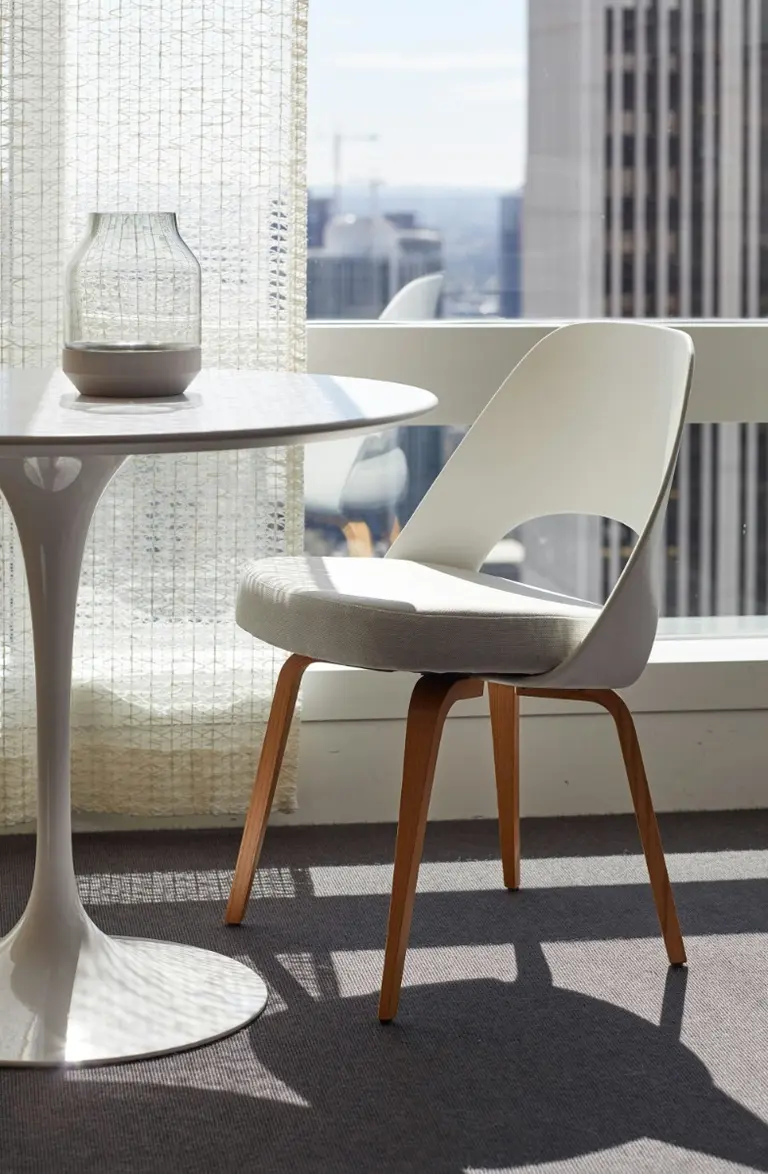
Before the Tulip collection, Saarinen designed the Womb Chair in 1948 for Florence Knoll, who reportedly asked him for a chair she could curl up in. The result is a wide, deep shell with a rounded back that wraps around the body, paired with a slim metal base. It works best as a standalone lounge piece rather than part of a matched set, in a reading corner, next to a fireplace, or as an accent chair that doesn't need to match anything else in the room. Because the shell is generously sized, it needs more floor space than a typical armchair, so it's worth measuring before committing to a spot.
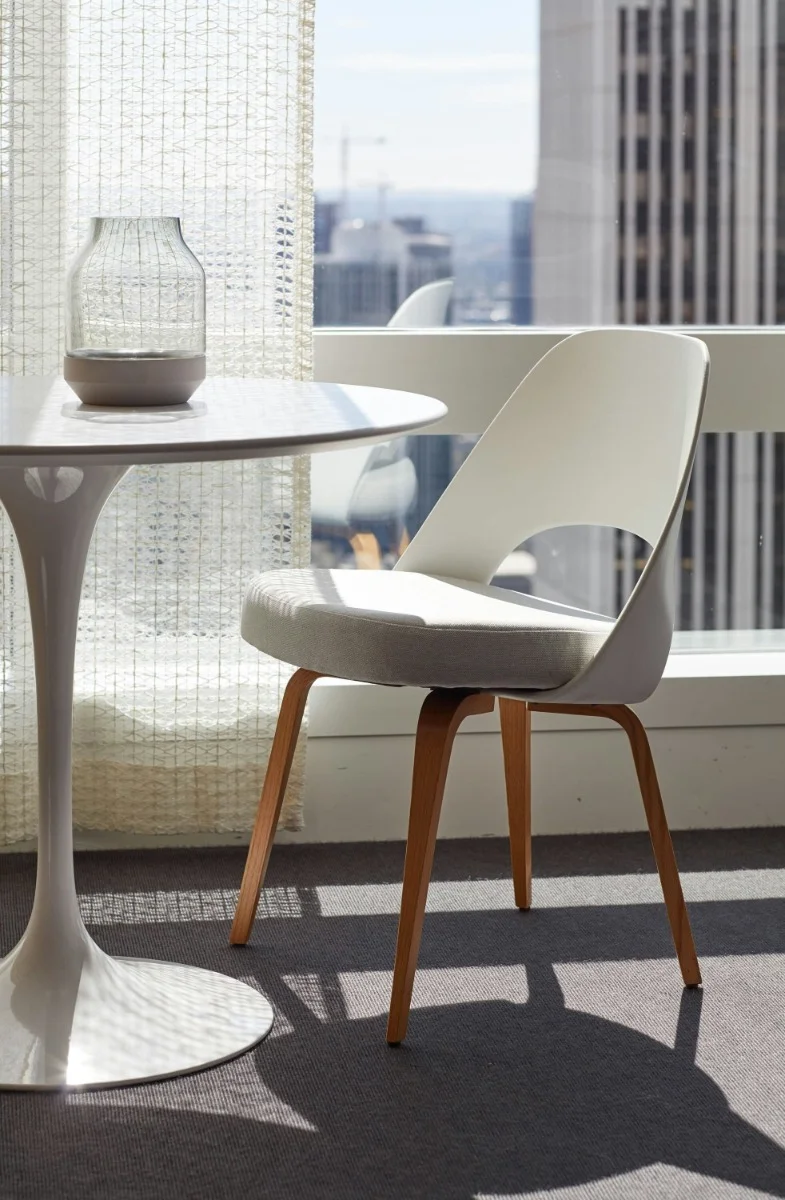
Knoll makes matching Tulip side chairs and armchairs with the same pedestal base, and pairing them with a Tulip table is the most cohesive option if you want the full look. That said, plenty of rooms mix a Tulip table with other seating, wood dining chairs, upholstered chairs, or a bench, for contrast. The pedestal base is distinctive enough that it holds its own even without matching chairs underneath it. A rough rule for planning seating: leave 24 to 26 inches per seat around the table edge, and at least 36 inches between the table edge and any wall for chairs to pull out comfortably.
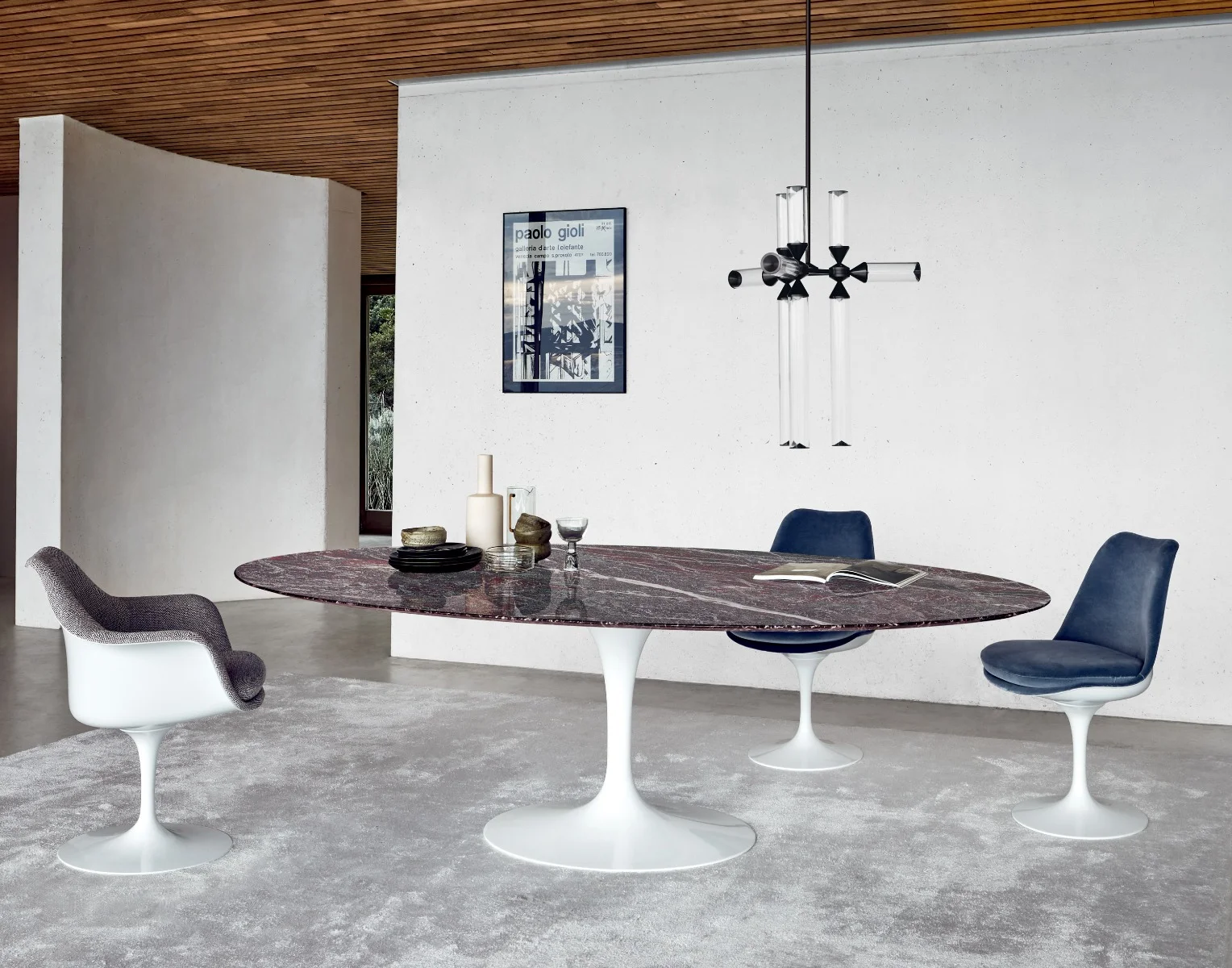
Knoll holds the license to produce Saarinen's original designs, and pieces from Knoll come with the manufacturing quality and warranty that licensed production includes. Replicas are common at lower price points, but they typically use different materials for the base and top, and the proportions are often slightly off from the original. If getting the actual Saarinen design matters to you, buying from an authorized Knoll dealer is the way to confirm that.
GR Shop carries the Knoll Saarinen collection, from dining tables to the Womb Chair, along with a broader range of dining tables if you're weighing other options for the room.