Noguchi Coffee Table Guide
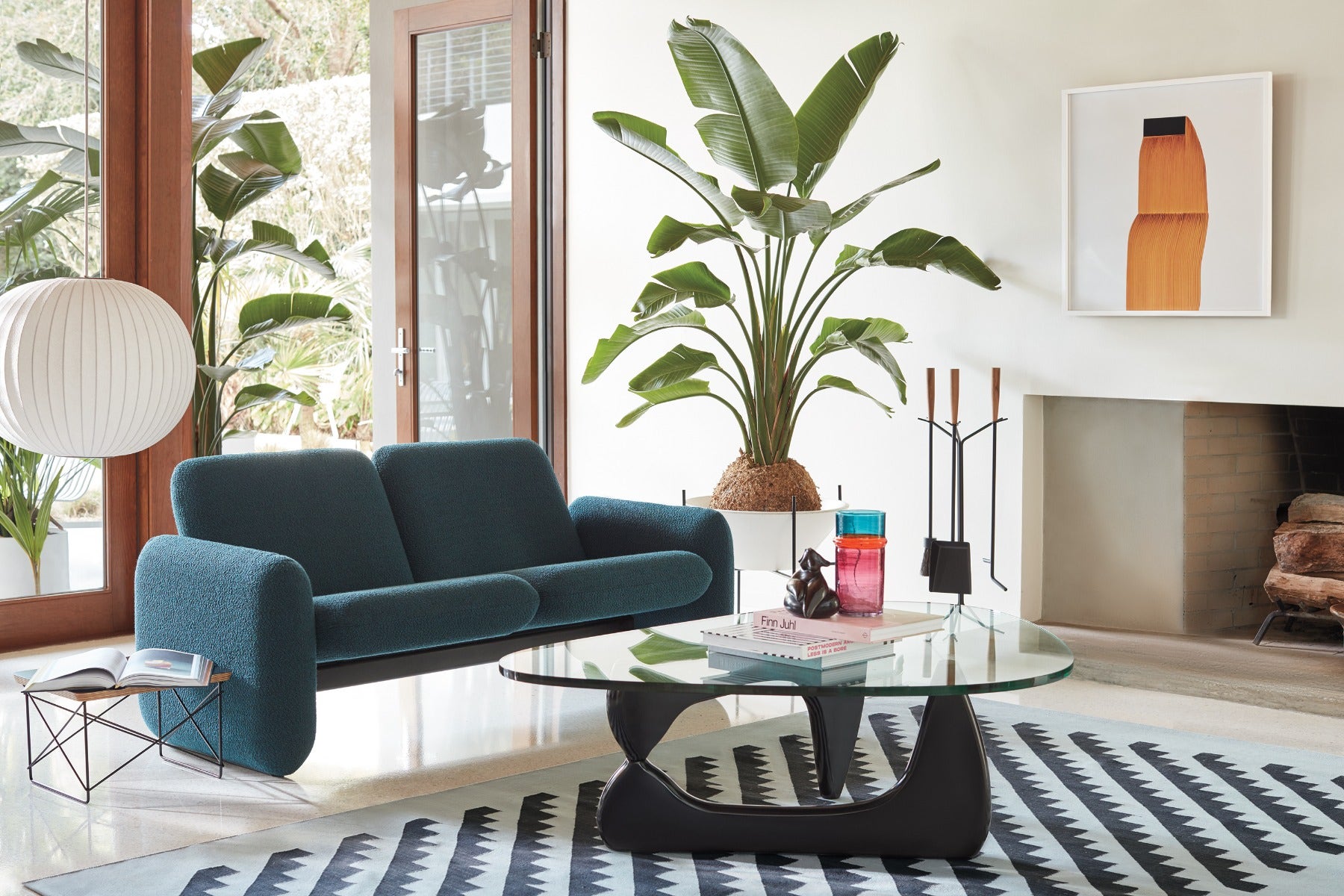
The Noguchi Coffee Table looks simple in photos, a curved glass top over a wooden base, but that simplicity is exactly why it's been copied so often since Isamu Noguchi designed it in 1944. If you're considering one, here's what actually matters before you buy: the fit in your room, the base material, and how to tell an original from a replica.
What is the Noguchi Coffee Table?
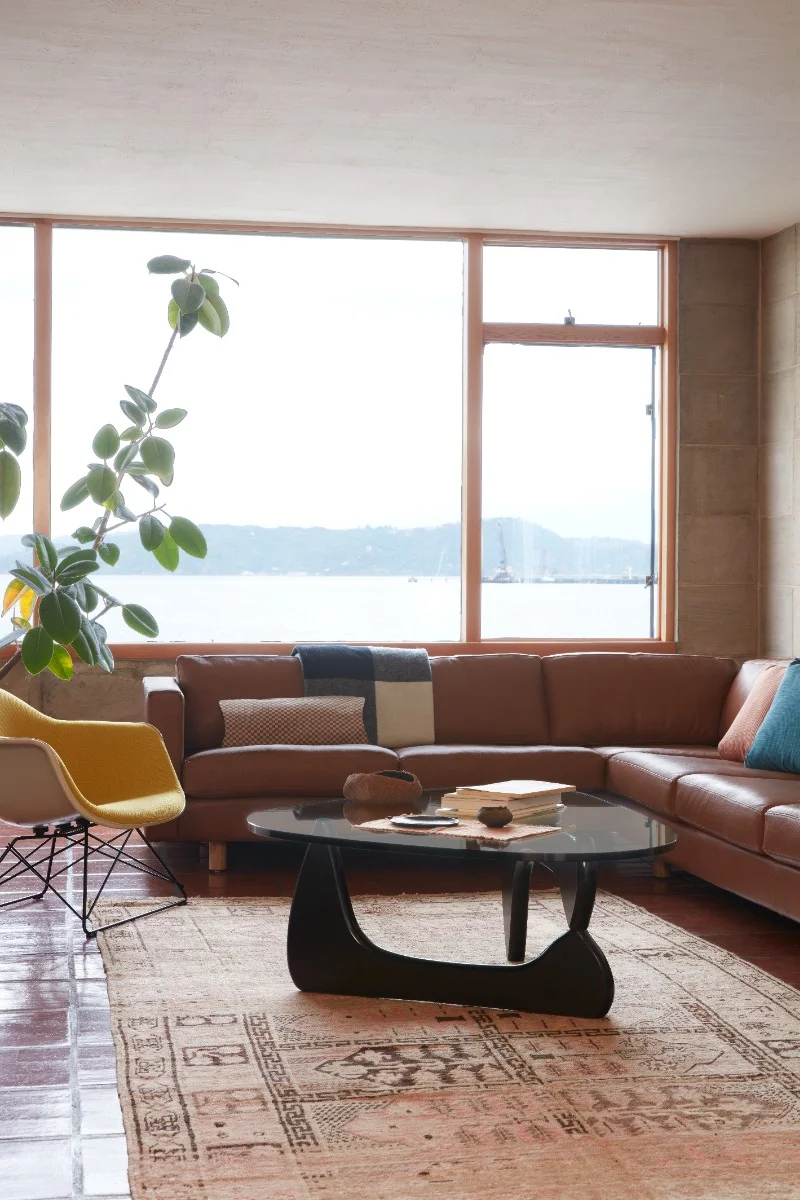
Isamu Noguchi, an artist and designer known for sculpture as much as furniture, created this table using two interlocking wood pieces that form the base and support a freeform glass top. The design has been in continuous production by Herman Miller since 1948. What makes it stand out isn't just the shape, it's that the base itself is the structural support and the visual centerpiece at the same time. There's no hidden frame doing the work.
Why the glass top and sculptural base matter
The glass top is cut in an organic, asymmetrical shape rather than a standard oval or rectangle, and it rests directly on the wood base without hardware. That's a deliberate design choice, meant to let the base read as a piece of sculpture with the glass floating just above it rather than a table built around a frame. The wood base is made from two identical curved pieces that interlock and can pivot, which is part of what gives the table its subtle movement and asymmetry depending on how it's positioned.
Noguchi Table dimensions: will it fit your room?
The table measures roughly 50 inches long, 36 inches wide, and 15.75 inches high. That low height is worth noting. It sits lower than many standard coffee tables, which works well with low-profile modern sofas but can look undersized next to a taller, more traditional sofa. Measure the distance from the front of your sofa to where you want the table to sit, keeping in mind the table's irregular shape means clearance varies at different points around it, not just at the widest measurement.
Walnut, black, and natural base options
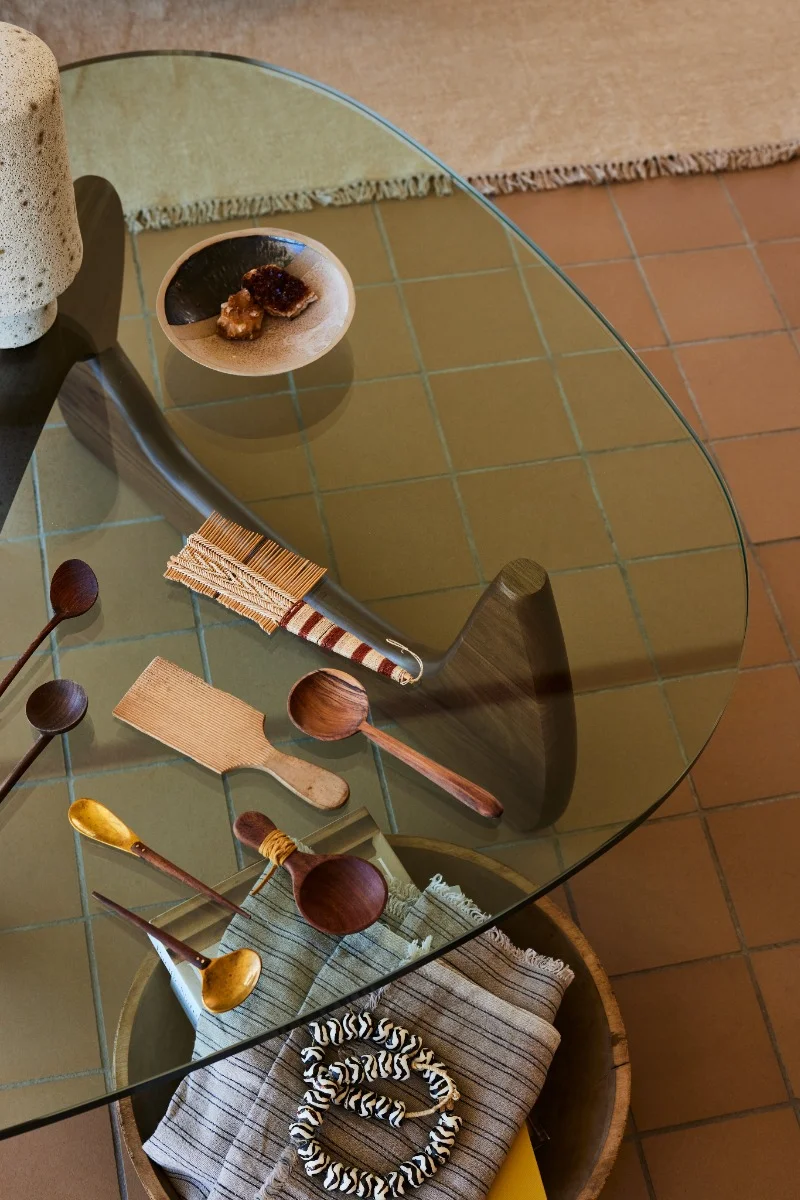
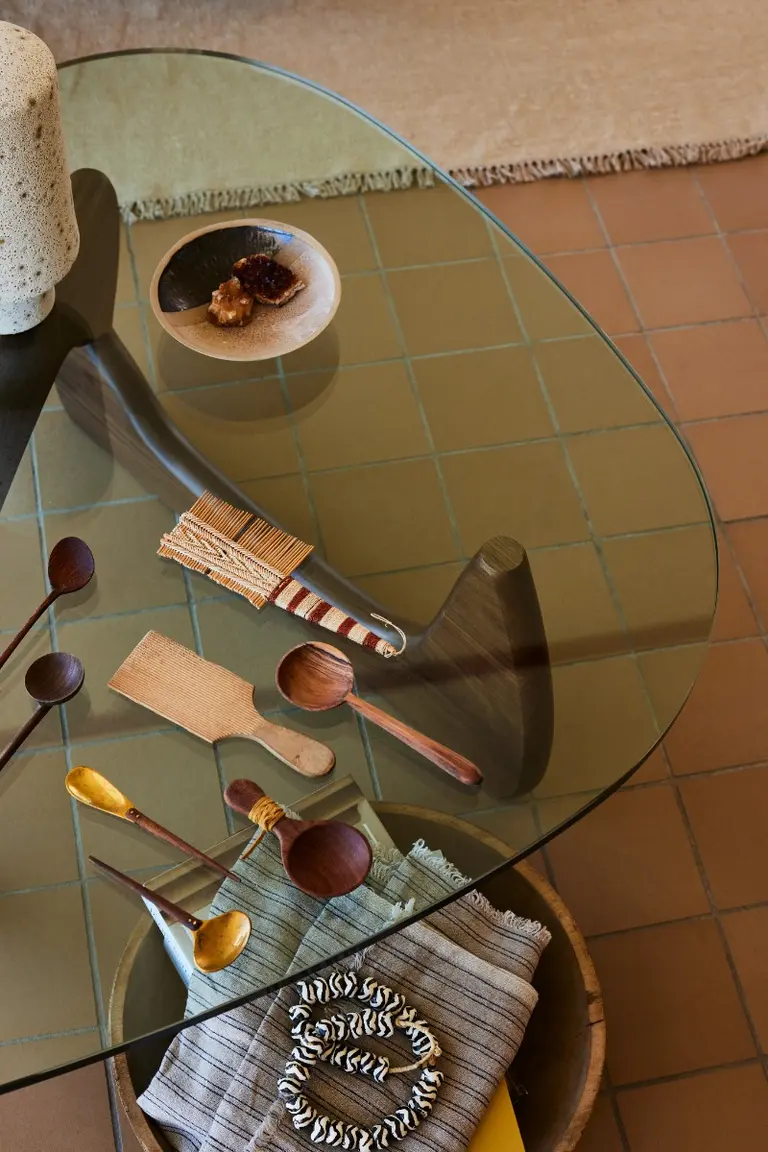
Herman Miller offers the base in a few finishes, most commonly walnut, black, and a lighter natural or ebonized option. Walnut is the warmest and most traditional pairing, especially in rooms with other wood furniture. Black gives the table a sharper, more graphic presence in the room, which works well in more minimal or high-contrast interiors. The finish you choose changes how much the base pulls focus versus how much the glass top does.
How to style the Noguchi Table with sofas and lounge chairs
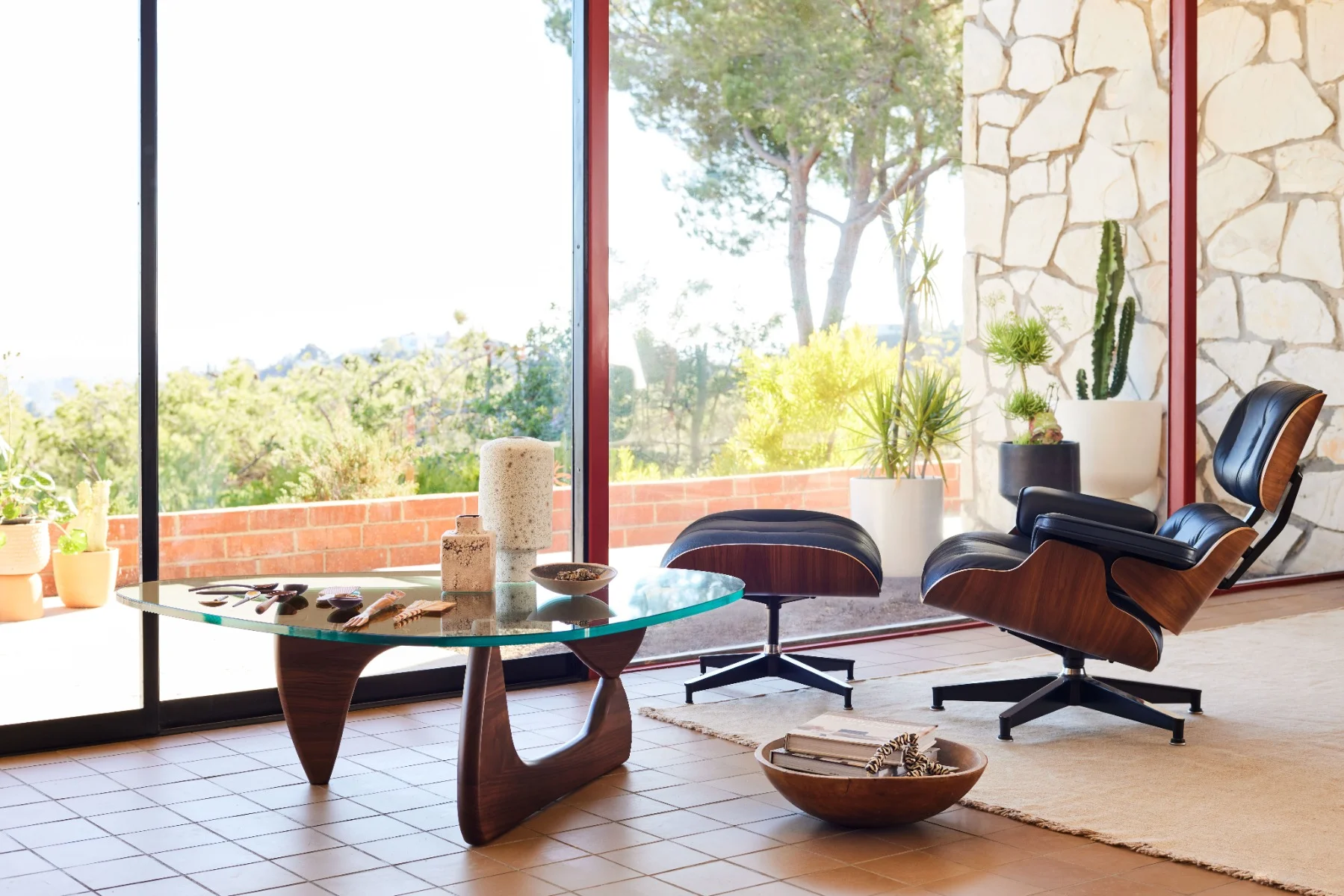
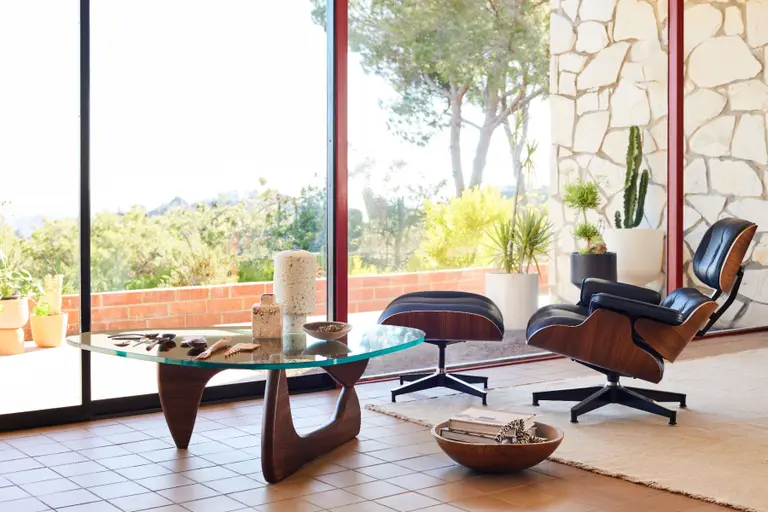
Because the base has real visual weight, this table works best with seating that's simpler in shape. A low, clean-lined sofa lets the Noguchi Table's curves stand out without competing for attention. It also pairs naturally with other mid-century pieces, an Eames Lounge Chair nearby for example, since both designs share a similar era and design language even though the shapes are different.
Original vs replica: what to know
Genuine Herman Miller Noguchi Tables carry a manufacturer's mark, usually etched into the glass or stamped on the wood base. The interlocking base pieces should fit together with a precise, snug joint. Replicas often use lower grade wood or glue the base together instead of allowing it to interlock and pivot, which changes both the look and the subtle movement that's part of the original design. If a listing doesn't specify Herman Miller manufacturing, ask before buying.
Care tips for glass and wood
The glass top should be cleaned with a standard glass cleaner, avoiding anything abrasive that could scratch the surface. For the wood base, avoid placing it in direct sunlight for extended periods, since UV exposure can change the finish tone over time. Because the glass simply rests on the base, avoid dragging the table across the floor. Lift it instead, so the top doesn't shift off center.
See the full range of finishes for the Herman Miller Noguchi Table on our site, and browse our coffee tables category, Herman Miller brand page, and living room category for pieces that pair well with it.