
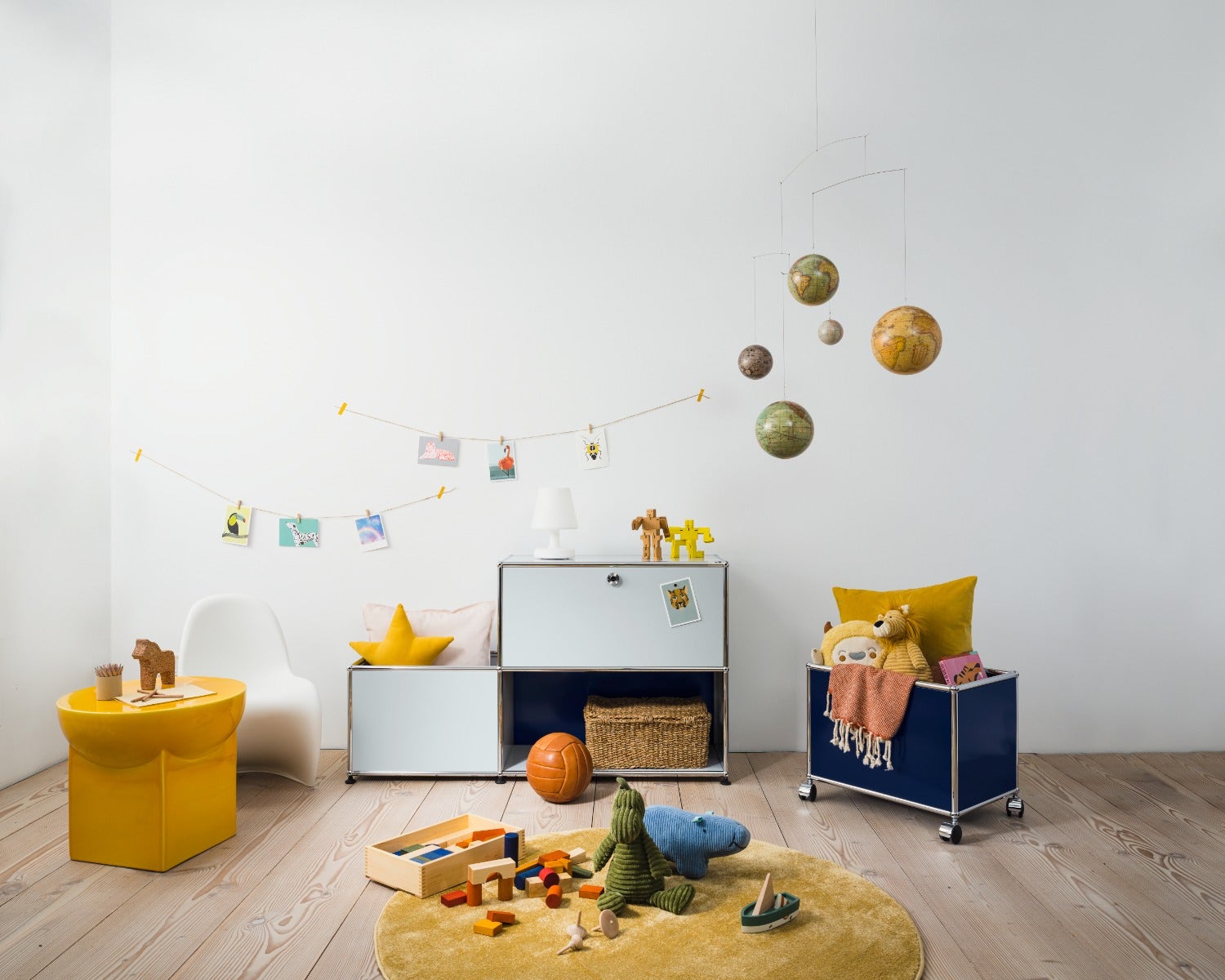
The System Behind USM Haller
If you've ever seen a USM Haller piece in someone's living room, you probably remember it. The colored steel frame, the glossy panels, the way it looks like it was built for that exact spot even though it wasn't. That's the trick of the system: it's not really "a piece of furniture." It's a kit that turns into whatever you need.
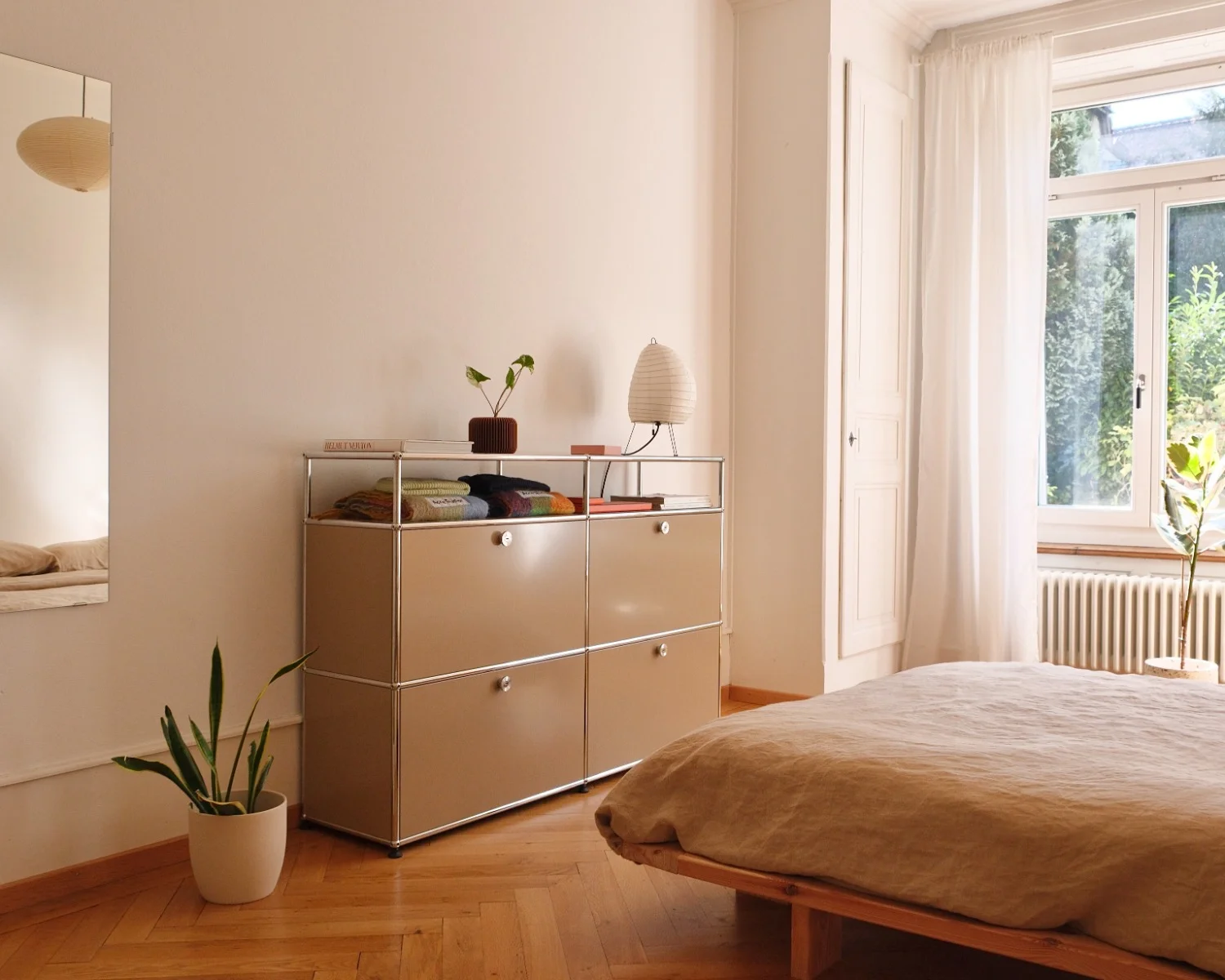
USM Haller started as an office storage system in Switzerland in the 1960s and has since made its way into homes everywhere. It's built from a small set of parts, chrome tubes, ball connectors, and lacquered steel panels, that snap together without tools. Tubes form the frame, ball connectors join them at the corners, and panels snap in as sides, doors, drawers, or shelves. Because the geometry is standardized, a panel from one piece fits a frame from another. That's what lets you start small and expand later, or take a piece apart and rebuild it into something else entirely if your space changes.
That modularity is the whole story. The same components that build USM shelving can just as easily become a room divider, since the frame is open on all sides and can be finished with doors, drop-down panels, or left open for books and objects. Used to split a room, it does double duty: storage on both sides, without closing the space off the way a solid wall would.
For living and dining rooms, USM credenzas and sideboards tend to be the most common starting point. They give you closed storage at a height that works for serving, display, or hiding the stuff you don't want out, with doors for a cleaner look or drawers for smaller items. The same frame, sized differently, becomes a media console. Cable access panels and ventilation gaps for AV equipment are part of the standard configuration, so you're not retrofitting a storage piece to hold a TV. It's built for that from the start.
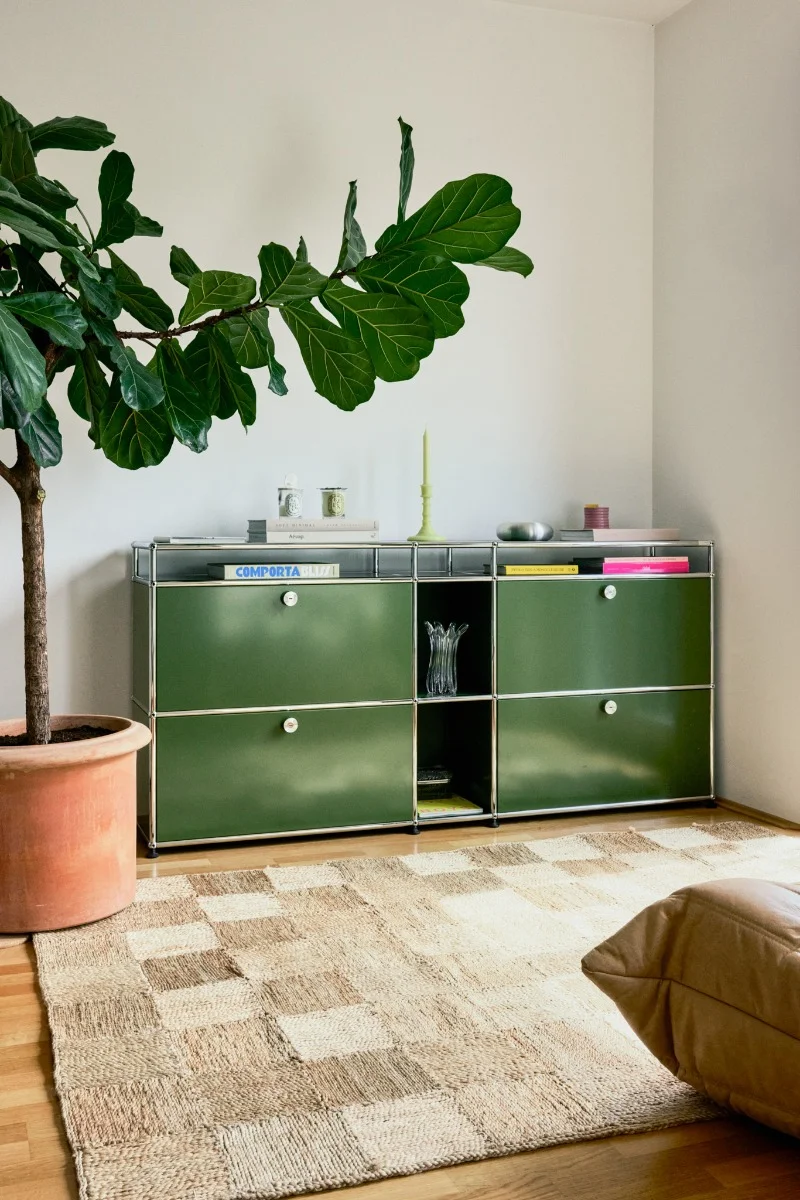
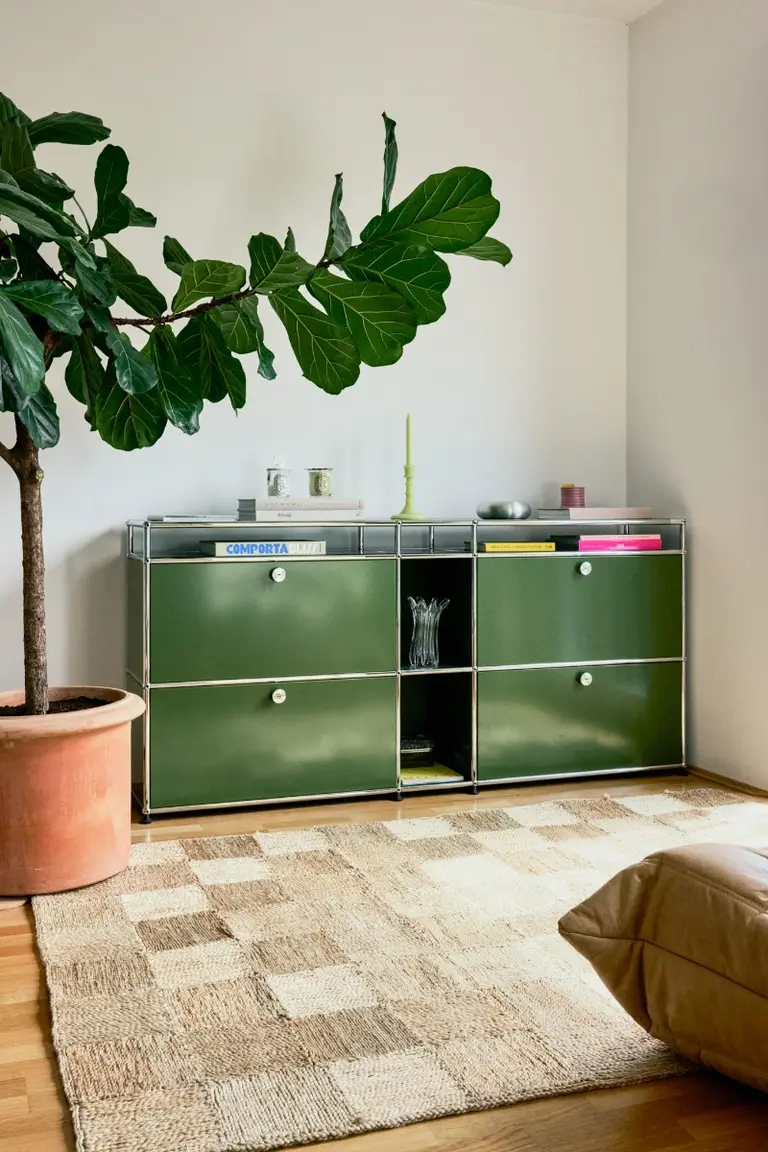
A few things worth thinking through before you configure a piece. Height changes both function and how it reads in a room, nightstand height sits around 20 inches, credenza height closer to 30. Depth matters too: shallower units work better in hallways and smaller rooms, while deeper ones hold more but need more floor space. And since panels are interchangeable, colour is flexible, you can mix tones within one piece or keep it monochrome, from classic white and black to brighter options..
There's no single "right" configuration. The point of the system is that you can match it to the room you actually have, and change it later if that room changes too.
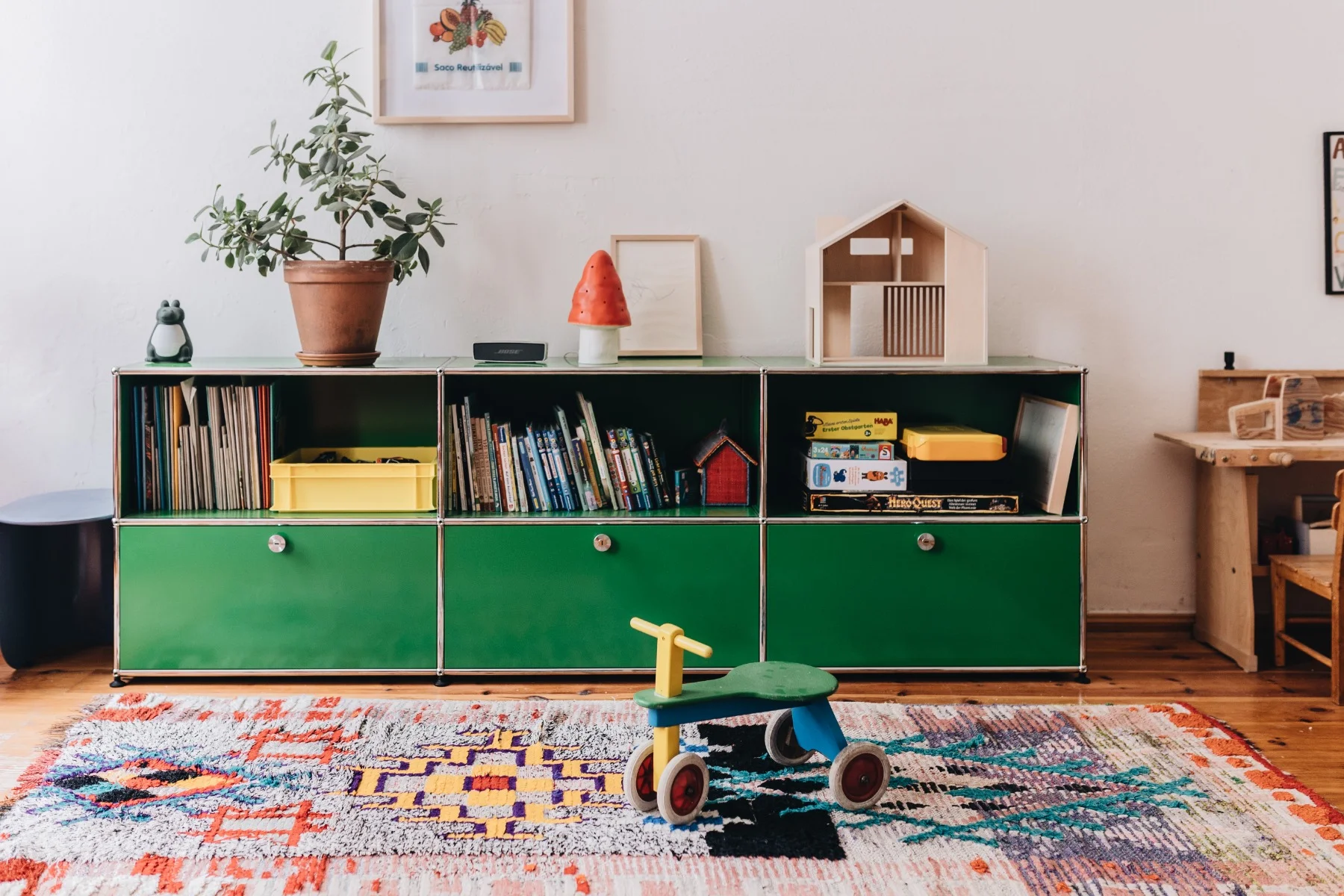
GR Shop carries USM Haller across shelving, credenzas, desks, and storage, along with office shelving and storage if you're outfitting a workspace. Browse by size and configuration, or reach out if you want help planning a piece for a specific room.