Barcelona Chair Guide: Details, Dimensions, and How to Style It
The Barcelona Chair has been imitated for almost a century, which tells you two things. One, the design holds up. Two, you need to know what you're actually buying before you spend the money. This guide covers what makes the original worth it, how to plan for its size, and how to use it in a room without it looking like a museum piece dropped into your living room.
What is the Barcelona Chair?
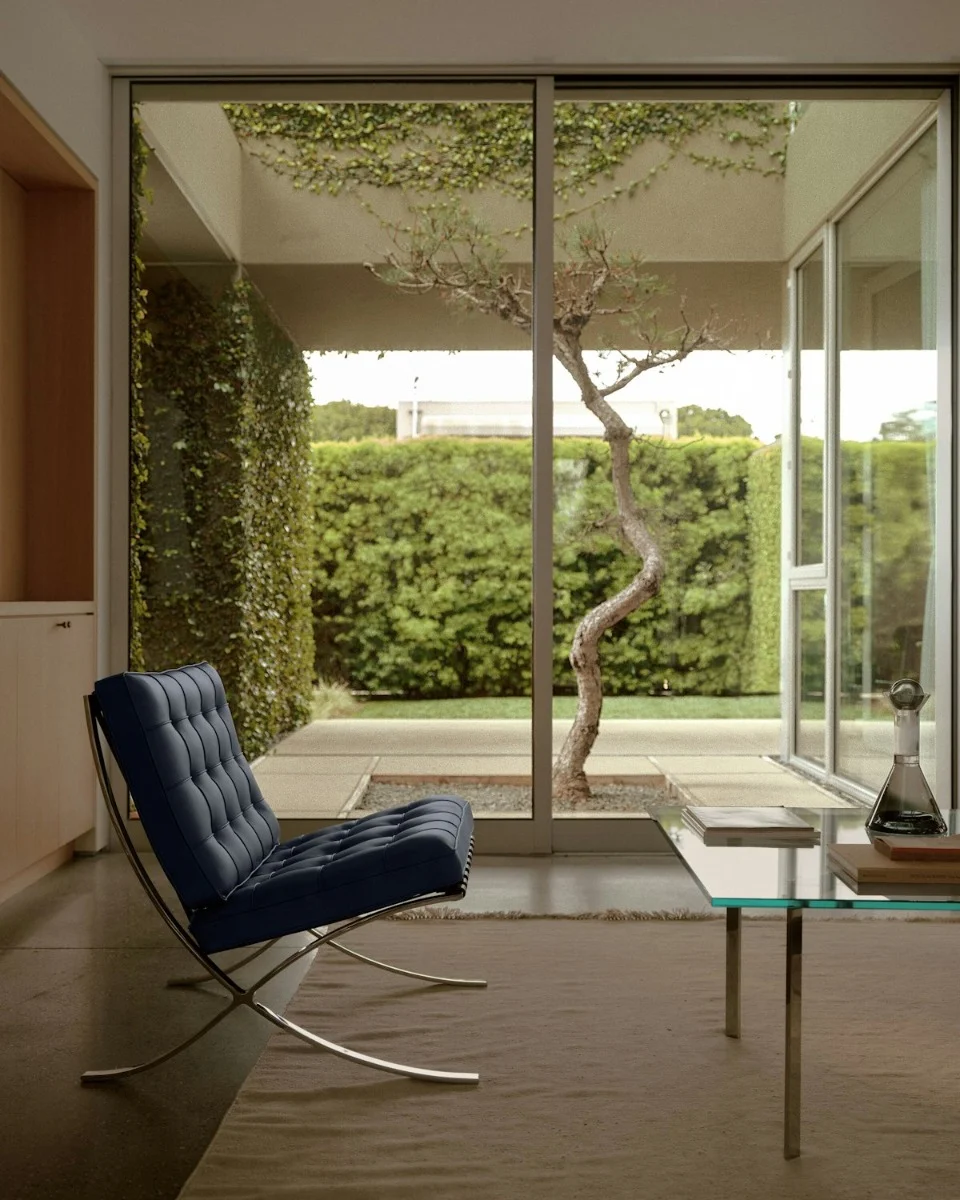
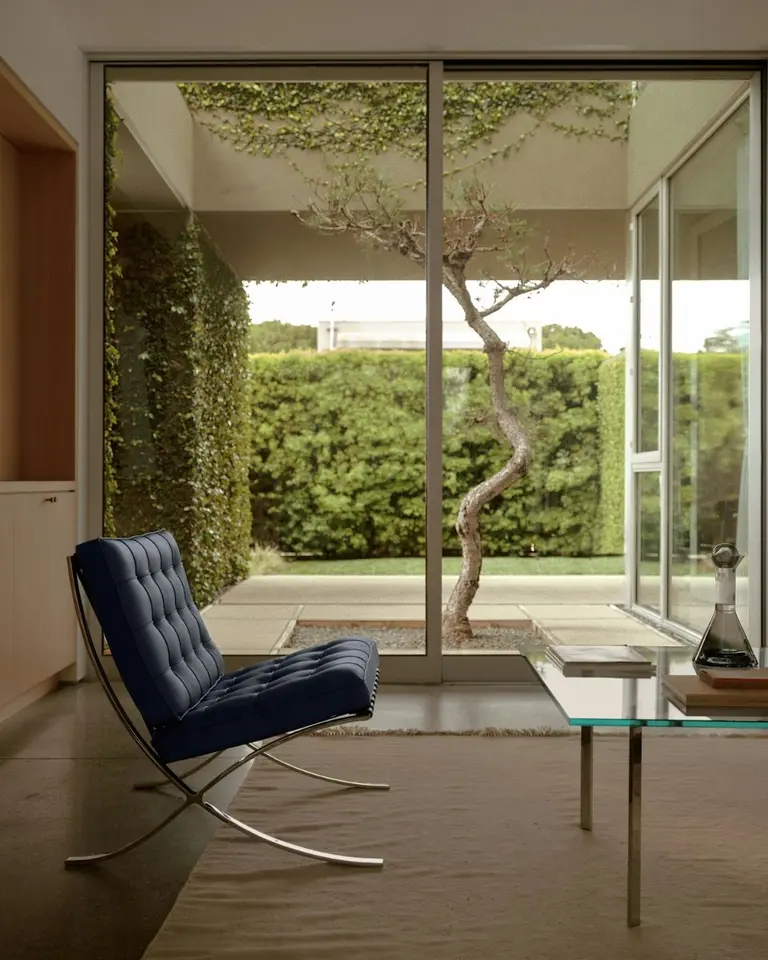
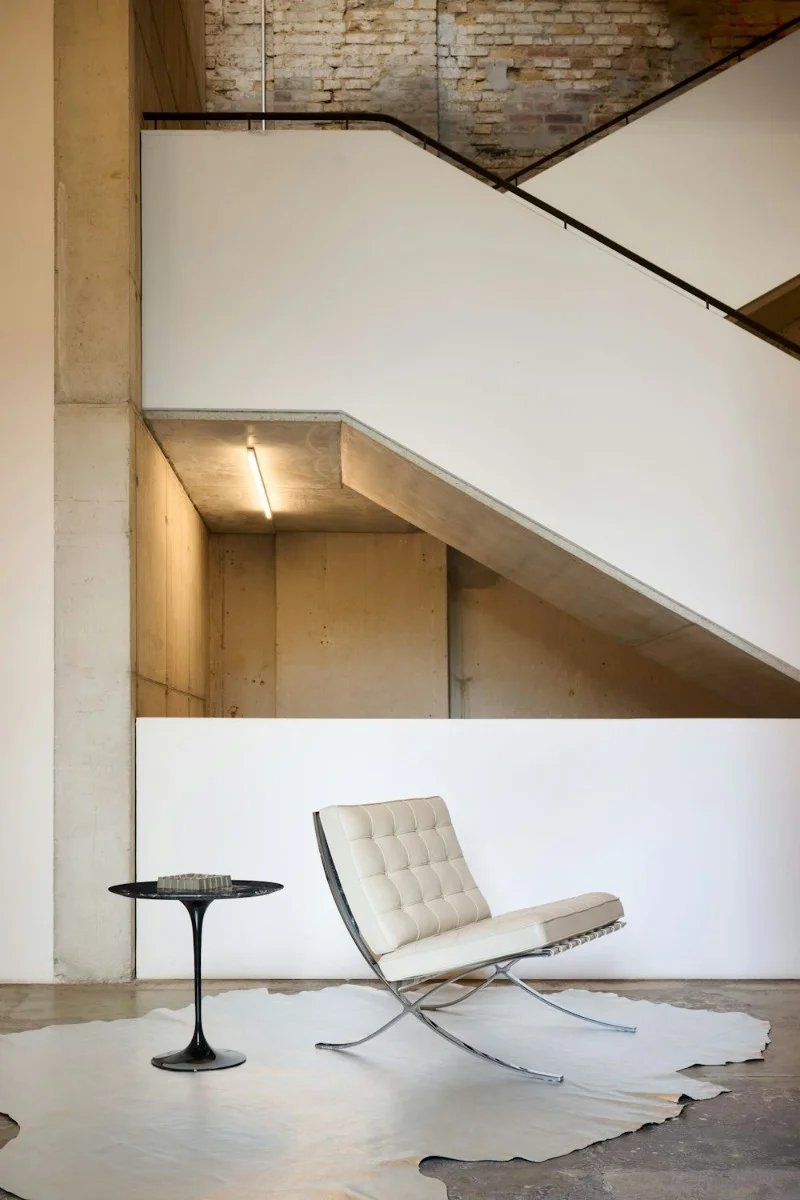
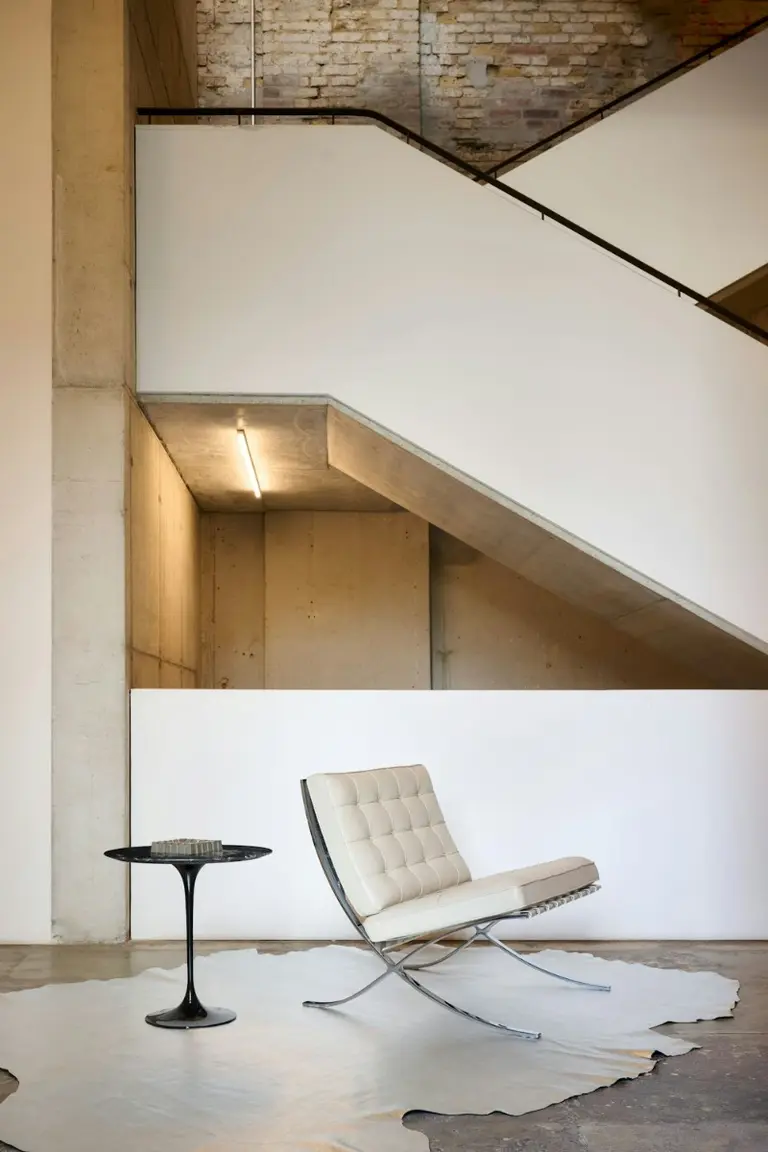
Ludwig Mies van der Rohe designed the chair in 1929 for the German Pavilion at the International Exposition in Barcelona, which is where the name comes from. The design is deceptively simple: an X-shaped frame supporting a leather cushion seat and back, no arms, no wood, nothing extra. It was meant to look like a single continuous gesture, and even now it's one of the few chairs that reads as sculpture and seating at the same time.
Why Knoll's version matters
Knoll has held the exclusive manufacturing license for the Barcelona Chair since 1953, and Mies himself worked directly with them on production. That matters because this is one of those designs where the manufacturing details, not just the shape, are what make it work. The frame's proportions, the way the leather is tufted, and the finish on the stainless steel all come from decades of refinement under license. Replicas copy the outline. They don't always get the proportions or materials right, and the difference shows up the moment you sit in one.
Barcelona Chair dimensions and room planning
The chair itself is roughly 30 inches wide, 30 inches deep, and 30 inches tall, though exact dimensions vary slightly by year of production. What surprises people is how much floor space it actually needs once you account for how low and open the frame is. It doesn't tuck under a table or squeeze into a corner the way a typical armchair does. Give it room to breathe, ideally as a standalone piece rather than crammed between two other chairs.
Leather, frame, and cushion details to know
Knoll offers the Barcelona Chair in several leather grades, from a smoother Spinneybeck leather to more premium options with visible grain and character. The frame comes in polished stainless steel as the classic choice, though brushed and other finishes exist. The cushions are tufted with leather straps rather than stitched buttons, which is part of what gives the chair its clean, architectural look rather than a plush, overstuffed one.
Barcelona Chair vs Barcelona Stool: how to pair them
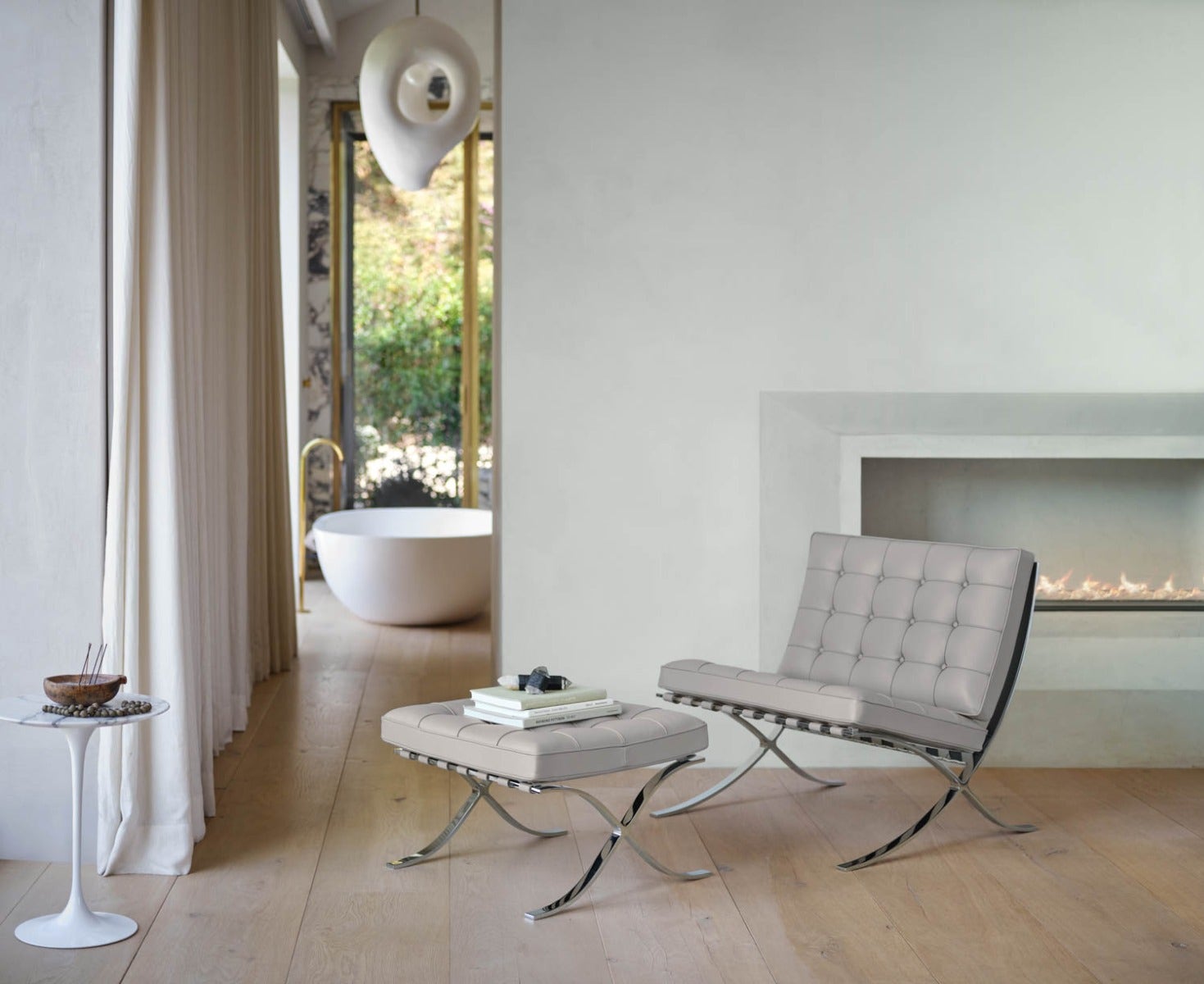
The Barcelona Stool shares the same frame design and leather but drops the back, making it lower and more compact. Most people use the stool as a side table or extra seating rather than a primary chair. Pairing a Barcelona Chair with one or two stools gives you a coherent seating group without needing a matching sofa, which is a common way designers use this piece in smaller living rooms..
How to style the Barcelona Chair in modern interiors
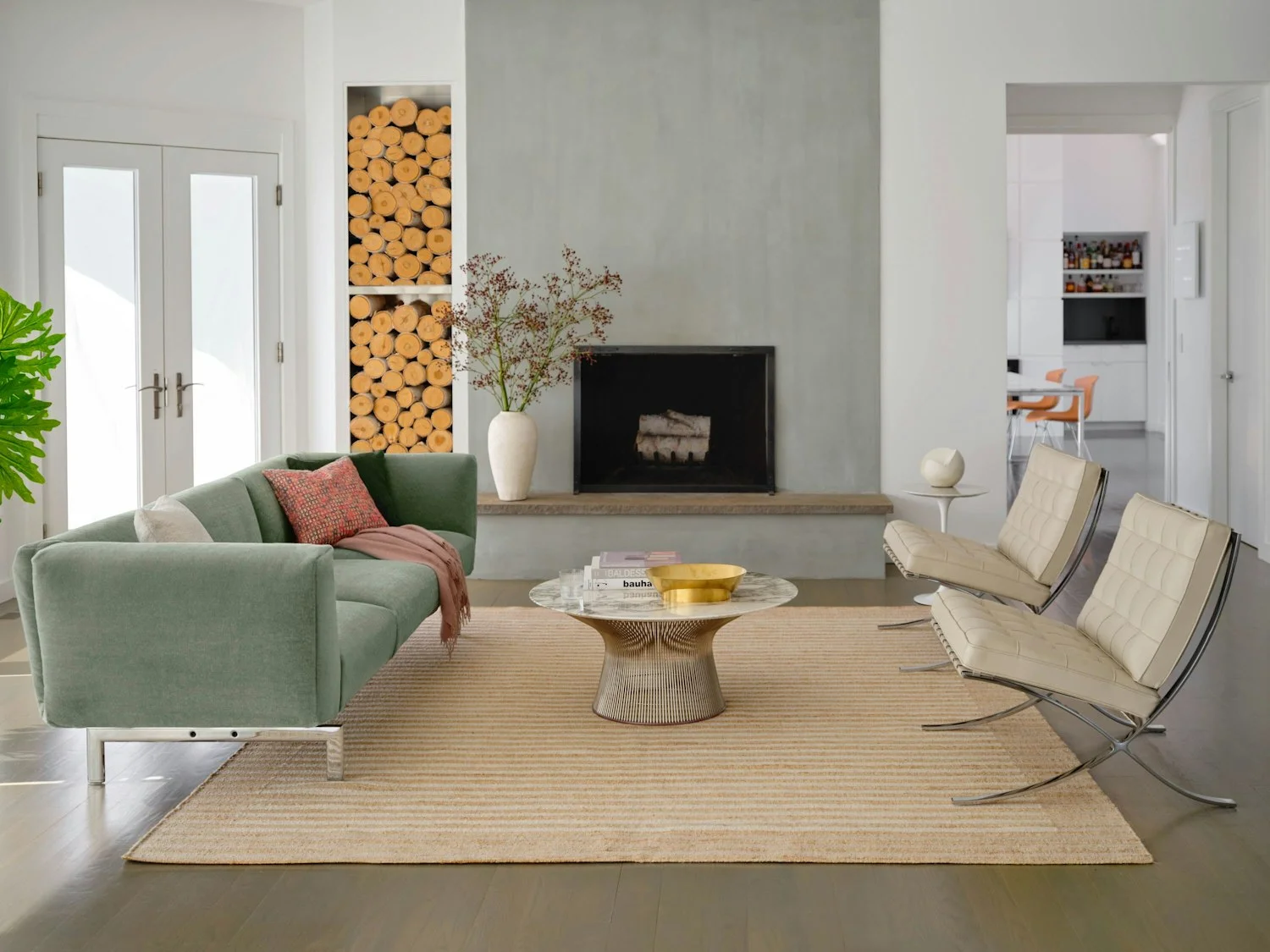
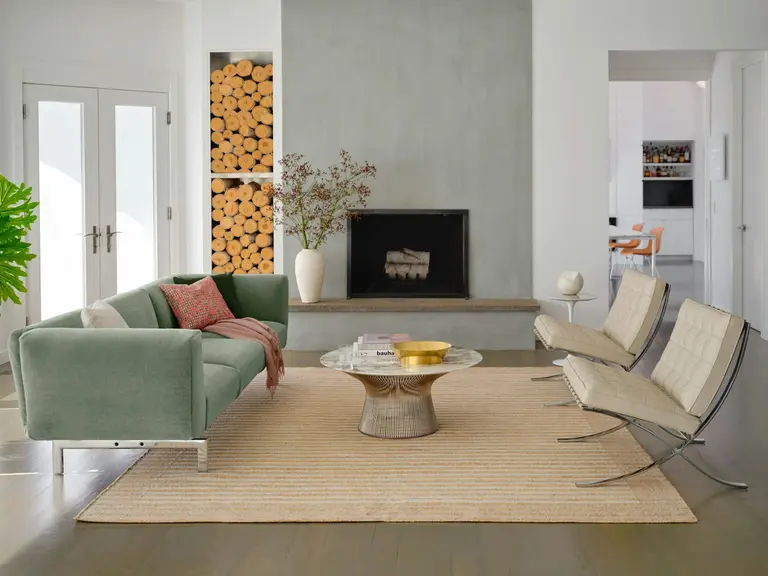
This chair works best when it's not surrounded by other statement pieces. Let it be the focal point. A neutral rug, simple lighting, and a sofa with a different silhouette (something softer or more upholstered) will let the Barcelona Chair's geometry stand out instead of competing with it. It also does well near large windows, where the openness of the frame doesn't block light the way a bulkier chair would.
Authentic vs replica: what buyers should watch for
Genuine Knoll Barcelona Chairs carry a manufacturer's tag, typically on the underside of the cushion or frame, along with a specific leather strap tufting pattern that's hard for replicas to match exactly. If a listing is vague about the manufacturer or leaves out "Knoll" entirely, that's worth asking about directly. The frame welds and polish quality are also a giveaway. Authentic frames have a smooth, continuous finish with no visible seams at the joints.
Explore the Knoll Barcelona Chair, along with the matching Barcelona Stool, on our site. You can also browse the Knoll brand page or our broader lounge seating category for pieces that work well alongside it.